What to Do After Your Autistic Quiz: A Step-by-Step Guide to Understanding Your Results
The moment you receive your online quiz results, a wave of questions can flood your mind. You might be staring at a score that suggests you have autistic traits, leaving you wondering, "What does this all mean?" Perhaps you feel a mix of relief, confusion, and anxiety. You've taken a brave first step toward self-discovery, but what comes next? How do you navigate the complex healthcare system to get clear answers?
If you've started this journey with an online screening, you are not alone. Many adults begin their path to understanding their neurotype with a simple search and a quiz. This guide will serve as your roadmap. We will walk you through the often overwhelming process of pursuing a formal evaluation. Having a clear plan can transform uncertainty into empowered action. An online tool like an autistic quiz is a valuable starting point, and this article will help you understand what to do with the insights you've gained.

After Your Autistic Quiz: Understanding Next Steps
Receiving results from an online autistic quiz is significant. It provides clues about why you've felt different for years. However, it's important to understand these results in context. This is just the beginning of your journey. Let's break down how to move forward thoughtfully and effectively.
Interpreting Your Quiz Results: What Your Scores Mean Clinically
Your score on a quiz like the CAT-Q (Camouflaging Autistic Traits Questionnaire) or AQ (Autism-Spectrum Quotient) indicates the degree to which you identify with traits commonly associated with autism. A high score suggests you share many of these traits. However, it's important to remember that these are screening tools, not diagnostic instruments.
Clinically, a high score is seen as an indicator that a formal assessment may be warranted. It tells a professional that you have self-identified enough traits to justify a deeper look. It does not, by itself, confirm you are autistic. Many other conditions, such as ADHD, social anxiety, or PTSD, can have overlapping traits. A professional assessment is designed to differentiate between these possibilities.
When to Consider a Professional Assessment: Signs You Should Seek Evaluation
Pursuing a formal diagnosis is a personal choice. Many autistic people don't feel the need for an official label. However, there are compelling reasons why some choose to seek one. Consider seeking a professional assessment if:
- You need workplace or educational accommodations.
- You want access to specific support services or therapies.
- Your mental health is suffering, and you need clarity to find the right therapeutic support.
- You feel a deep, persistent need for validation and to finally understand the "why" behind your life experiences.
- The uncertainty is causing you significant distress or anxiety.
If these points resonate with you, a formal evaluation could provide the clarity and resources you need.
Understanding the Difference Between Screening and Diagnosis
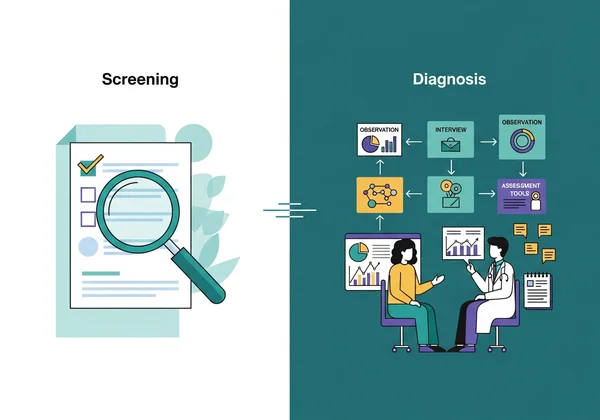
This is the most critical distinction to understand. An online quiz is a screening tool. Think of it like a smoke detector. It alerts you to the possible presence of fire (autistic traits), but it can't tell you if it's a small kitchen mishap or a major house fire. It's a valuable first alert system. Many people find that taking a preliminary autism spectrum quiz gives them the confidence to take the next step.
A formal diagnosis, on the other hand, is the full investigation by the fire department. It is a comprehensive process conducted by a qualified professional, like a psychologist or psychiatrist. This process often involves:
- Detailed interviews about your developmental history.
- Clinical observations.
- Standardized diagnostic tools (like the ADOS-2).
- Input from family members or partners, if possible.
Only a formal diagnosis is recognized for legal, medical, and academic purposes.
Finding the Right Autism Specialist: Your Roadmap
Once you decide to seek an assessment, the next hurdle is finding the right professional. This can feel like a daunting task, but a structured approach can make it manageable. You are looking for a partner in this process—someone who is knowledgeable, respectful, and experienced with adult autism, particularly in your demographic (e.g., women, non-binary individuals).
Building Your Provider Network: Where to Start Your Search
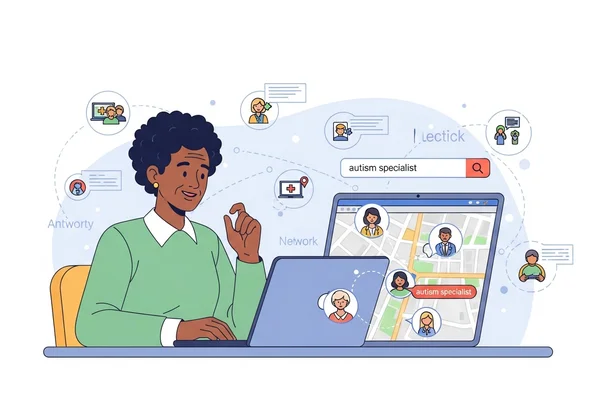
Finding a specialist who is accepting new patients and experienced in adult autism can be challenging. Here are some practical places to begin your search:
-
Your Primary Care Physician: Start by asking your family doctor for a referral. They may have a network of trusted mental health professionals.
-
Psychology Today: This website has a searchable directory of therapists and psychologists. You can filter by location, specialty (e.g., "Autism"), and insurance.
-
Autistic-Led Communities: Online forums, Facebook groups, and local support groups for autistic adults are invaluable resources. Members often share recommendations for affirming and competent clinicians.
-
University Psychology Clinics: Local universities with psychology or psychiatry departments sometimes offer lower-cost assessments conducted by doctoral students under supervision.
Key Questions to Ask Potential Autism Specialists
Before committing to a full assessment, it's wise to have a brief consultation with a potential provider. This is your opportunity to interview them and see if they are a good fit. Key questions to ask include:
- What is your experience with diagnosing autism in adults?
- Are you familiar with how autism can present differently in women or in people who mask heavily?
- What does your assessment process involve? What tools do you use?
- What is the estimated cost, and do you accept my insurance?
- What can I expect in the feedback session after the assessment is complete?
Their answers will give you a sense of their expertise and approach, helping you choose a specialist who makes you feel understood and respected.
Preparing for Your Autism Assessment: Documentation & Questions
The assessment process itself can feel intimidating. Being well-prepared can significantly reduce your anxiety and help you provide the evaluator with the clearest possible picture of your life experiences. This preparation involves both gathering documentation and getting into the right mindset.
Organizing Your Documentation: Creating Your Personal History File
Your evaluator will need to understand your entire life story, not just your current struggles. Compiling a "personal history file" beforehand can be incredibly helpful. You don't need to write a novel, but gathering notes and documents is a good idea. Consider including:
-
Your Quiz Results: Bring the results from any online tests you've taken, like the one from our autism quiz. Explain that this is what started your journey.
-
Childhood Memories & Report Cards: Notes about early social difficulties, intense interests (special interests), sensory sensitivities, or comments from teachers on old report cards.
-
Journal Entries: Any personal writing that documents your struggles with social burnout, sensory overload, or feeling different.
-
A List of Traits: Write down specific examples from your life that align with autistic traits (e.g., difficulties with small talk, stimming behaviors, distress from changes in routine).
-
Family Input: If you have a trusted family member, ask them for their memories of you as a child.

Preparing Emotionally: What to Expect During the Assessment Process
An autism assessment involves talking about your life in great detail, which can be emotionally draining. You might be asked personal questions about your relationships, your challenges, and moments when you felt isolated. It's okay to feel vulnerable.
Go into the assessment with the mindset of honesty and self-compassion. There are no right or wrong answers. The goal is not to "pass" a test, but to provide an authentic picture of who you are. Allow yourself to be tired afterward. Plan for a low-demand day after your appointments to rest and recover. This process is a marathon, not a sprint, and caring for your emotional well-being is paramount.
Your Empowered Path Forward: Taking the Next Steps
Your quiz results mark the beginning of a journey to deeper self-understanding—a significant first step in your exploration of neurodiversity. What you've learned today is that this journey, while complex, is navigable. You can move from the initial question of "Am I autistic?" to a place of clarity and action.
Remember these key takeaways:
- Online quizzes are valuable screening tools, but they are not a diagnosis.
- A formal diagnosis is a comprehensive process conducted by a qualified professional.
- You can find the right specialist by being systematic in your search and asking insightful questions.
- Preparing your personal history and managing your emotional expectations can make the assessment process smoother.
This journey empowers you to replace confusion with clarity and move from masking to authenticity. It's your path to understanding and embracing your neurodiversity. If you are just beginning to ask these questions, a reliable and insightful first step is crucial. Start your test today to gain personalized insights and begin your journey of self-discovery.
Frequently Asked Questions About Autism Diagnosis After Quiz Results
What should I do immediately after taking an autistic quiz?
Immediately after, take a moment to breathe. A quiz result is information, not a judgment. Read about the experiences of other late-diagnosed autistic adults. Use the result as a prompt for further research and self-reflection, not as a final answer.
How do I know if I need a formal autism assessment?
Consider a formal assessment if you need official accommodations for work or school, if you are seeking specific therapies, or if the lack of a definitive answer is causing you significant mental distress. If you are content with self-identification, a formal assessment may not be necessary for you.
What's the difference between an online autistic quiz and a professional evaluation?
An online quiz is a self-reported screening tool that suggests the possibility of autistic traits. A professional evaluation is a multi-faceted diagnostic process conducted by a clinician, involving interviews, observation, and standardized tests to provide a formal, medically recognized diagnosis. A screening from a site like our autism quiz tool is a great way to decide if a full evaluation is worth pursuing.
How long does the autism diagnosis process typically take for adults?
The timeline varies widely. It can take several months to find a qualified provider with availability. The assessment itself may be spread over several sessions. From the first call to the final report, the process can take anywhere from a few months to over a year, depending on your location and healthcare system.
Can I get accommodations or support services after receiving a diagnosis?
Yes. A formal diagnosis is often the key to unlocking support. This can include workplace accommodations (e.g., flexible hours, noise-canceling headphones), academic support, and access to therapists or coaches who specialize in working with autistic adults.