Late-Diagnosis Journey: Your Guide After an Autistic Quiz
That first step toward truly understanding yourself? It can feel monumental. If you've just completed an autistic quiz, you might be sitting with a mix of emotions: relief, confusion, validation, or even apprehension. You may be asking yourself, Am I autistic? Know that this moment is a significant point in your journey, and you are not alone. This guide is here to walk with you, offering clarity and support as you navigate the path of adult autism discovery. The initial step is often the most challenging, and we're here to help you make sense of it all. To begin exploring your unique traits, you can always start your journey on our homepage.
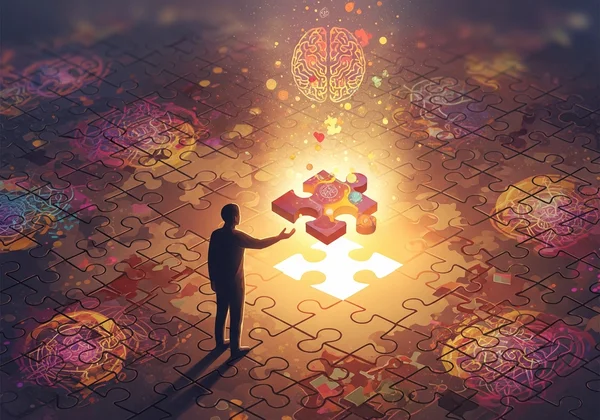
Understanding Late-Diagnosed Autism in Adults
Discovering you might be autistic as an adult can feel like finding a missing piece of a puzzle you didn't even know you were solving. For many, this late diagnosed autism brings a lifetime of experiences into sharp focus. It’s a profound shift in self-perception that explains so much, from social challenges to unique strengths.
Why Adult Autism Discovery is Often Missed
Many autistic adults, especially women and gender-diverse individuals, go undiagnosed for years. This is often due to outdated stereotypes of autism and a phenomenon known as masking, or camouflaging. You may have spent years learning to imitate neurotypical social behaviors to fit in, which effectively hid your underlying autistic traits from others and even from yourself. This constant performance is exhausting and a core part of the lived experience for many late-diagnosed autistics.
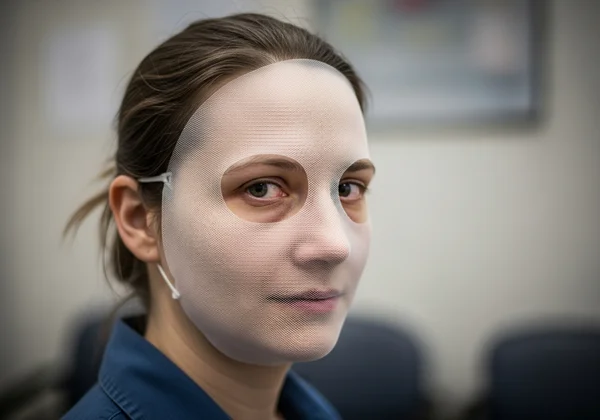
Common Traits & Experiences of Newly Identified Autistic Adults
Does your quiz result resonate with a lifetime of feeling slightly out of sync with the world? Many newly identified autistic adults share common experiences. These can include profound social exhaustion after interactions, intense passion for specific interests (often called special interests), a unique way of processing sensory information (like sensitivity to sounds or textures), and a preference for direct, honest communication. Recognizing these autistic traits in yourself is a powerful act of validation.
The Emotional Impact of Discovering You're Autistic
Discovering you might be autistic can stir up a complex mix of emotions, deeply personal to your journey. You might feel an incredible sense of relief as past struggles finally make sense. There can also be grief for the past and the challenges you faced without understanding. There might be anger that no one noticed sooner. All of these feelings are valid. Allow yourself the space to process this new information with kindness and self-compassion.
What to Do After Your Autistic Quiz: Next Steps
So, you have your results. This is where the journey truly begins. Understanding what to do after your autistic quiz is about turning this new insight into a tool for empowerment. It's about taking thoughtful, informed steps toward a more authentic and fulfilling life.
How Online Quizzes Aid Adult Autism Discovery
Online quizzes, like the scientifically-backed CAT-Q offered on our platform, are valuable screening tools. They are designed to help you identify patterns of traits and experiences that are common among autistic people. They provide a structured way to reflect on your life, helping you connect the dots between seemingly unrelated challenges and preferences. They are an accessible, low-pressure first step in the process of self-discovery.
Understanding Our AI Analysis
Unlike a simple score, our platform offers something more. After completing the quiz, you have the option to receive a personalized AI-powered analysis. This report goes beyond a number to provide deep insights into your unique profile of traits, potential strengths, challenges, and how they might manifest in your daily life. It’s designed to be a bridge between your result and self-understanding. You can get personalized insights to transform your score into a meaningful narrative.
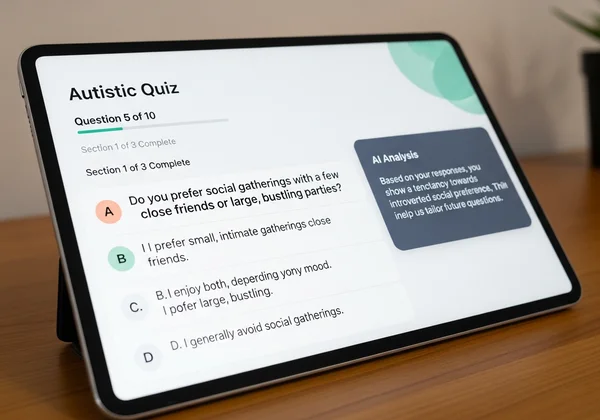
Online Quizzes vs. Formal Diagnosis: Setting Expectations
It is crucial to understand that an online quiz is not a formal diagnosis. We cannot state this enough. Our tools are for self-exploration and information purposes only. A formal diagnosis can only be provided by a qualified healthcare professional, such as a psychologist or psychiatrist. An online quiz can be a fantastic catalyst for deciding whether to seek a professional assessment, but it should never replace one.
Diving Deeper: Core Autistic Traits & Experiences
As you explore what being autistic might mean for you, you'll encounter concepts that may perfectly describe your life. Understanding these core experiences is key for any newly identified autistic person. It helps build a vocabulary for your inner world.
Unmasking & Autistic Masking: Living Authentically
Autistic masking is the conscious or unconscious suppression of natural autistic traits to appear more neurotypical. While it can be a survival strategy, it comes at a high cost, often leading to anxiety, depression, and burnout. The journey of "unmasking" is about slowly and safely allowing your authentic self to emerge. It’s about learning to honor your needs instead of suppressing them for the comfort of others.
Recognizing and Managing Autistic Burnout
Have you ever experienced a period of intense exhaustion where your skills seemed to vanish and you felt completely depleted? This may have been autistic burnout. It's a state of chronic exhaustion caused by the cumulative stress of navigating a world not designed for you. Recognizing the signs—like increased sensory sensitivity, loss of executive function, and social withdrawal—is the first step toward recovery and learning to manage your energy more sustainably.
Sensory Sensitivities & Special Interests: Embrace Your Traits
Many autistic people have heightened or dulled sensory sensitivities. A flickering light might be unbearable, or you might not notice you're cold until you're shivering. On the other hand, special interests are a source of immense joy, expertise, and energy. Embracing these core aspects of your neurotype—finding ways to create a sensory-friendly environment and dedicating time to your passions—is a cornerstone of autistic well-being.

Building a Fulfilling Life as a Newly Identified Autistic Adult
This discovery isn't about limitations; it's about possibilities. For a newly identified autistic adult, this knowledge is a key that unlocks a new way of living—one that is more authentic, compassionate, and accommodating to your true self. It's time to build a life that works for you.
Embracing Neurodiversity and Self-Acceptance
Neurodiversity is the beautiful idea that brain differences are a natural part of human variation. Your brain isn't broken; it's just different. Embracing this perspective is the foundation of self-acceptance. It allows you to stop trying to "fix" yourself and start appreciating your unique strengths, like deep focus, pattern recognition, and a strong sense of justice.
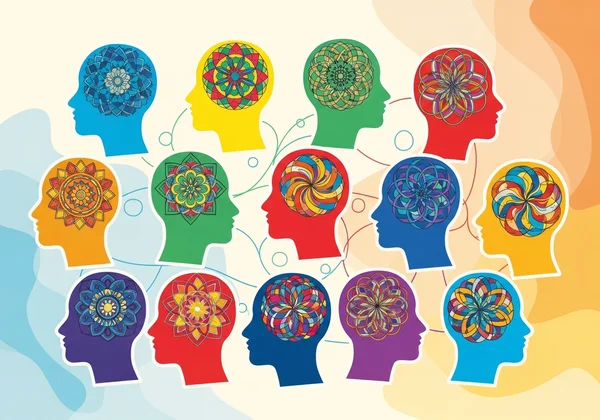
Finding Community and Support Networks
Connecting with other autistic people can be a life-changing experience. For the first time, you may feel truly seen and understood without having to explain yourself. Finding online forums, local groups, or social media communities provides invaluable support networks. Sharing experiences with peers validates your own and provides practical advice from those who have walked a similar path.
Navigating Relationships and Workplace Advocacy
This new self-knowledge can transform how you approach your relationships and career. It gives you the language to advocate for your needs, whether that means asking a partner for quiet time to decompress or requesting accommodations at work, like written instructions or a less distracting workspace. It empowers you to build healthier, more sustainable connections. For more guidance, explore our resources on the homepage.
Your Journey Continues: Embracing Adult Autism Discovery
Receiving an insightful result from an autistic quiz is not an endpoint; it's a doorway. It marks the beginning of a transformative journey toward self-acceptance and authentic living. This path is about understanding your past, honoring your present needs, and building a future that celebrates your unique mind. Your journey is your own, and every step you take is a testament to your courage and curiosity.
Ready to take that first step, or curious to dive deeper into your results? We invite you to try our free tool today and let your journey of self-discovery truly begin.
Frequently Asked Questions About Adult Autism Discovery
What are the common signs of autism in adults?
Common signs in adults often include difficulties with social communication and interaction (like finding small talk confusing), experiencing intense anxiety in social situations, having deep and highly focused interests, repetitive behaviors or routines, and heightened sensory sensitivities to light, sound, or touch.
Can an online quiz tell me if I am autistic?
No, an online quiz cannot provide a medical diagnosis. A tool like the one on our platform is a screening instrument designed to help you identify autistic traits you may possess. It’s an excellent starting point for self-reflection and can help you decide if you want to pursue a formal assessment with a qualified professional.
How do I know if I am autistic without a formal diagnosis?
Self-identification is considered valid by many in the autistic community. If, after extensive research, speaking with other autistic people, and deep self-reflection, you conclude that the autistic experience accurately describes your life, you can choose to identify as autistic. An online autism spectrum quiz can be a key part of this research process.
What should I do immediately after taking an autistic quiz?
Take a deep breath and sit with your feelings. Read through your results carefully, perhaps using our AI-powered report to explore your results more deeply. Consider reading articles, watching videos from autistic creators, and connecting with autistic communities online to see if their experiences resonate with yours.
Is it common to be late-diagnosed as autistic?
Yes, it is becoming increasingly common, especially for women and those who learned to "mask" their traits effectively from a young age. As public and professional understanding of autism broadens beyond outdated stereotypes, more adults are finally finding the language and validation for their lifelong experiences.