Can You Develop Autism? What Changes and What Was Always There
Can you develop autism suddenly, after trauma, or later in life? The short answer is that autism is a neurodevelopmental difference, so it begins early in brain development rather than appearing for the first time in adulthood. What can change is recognition. A person may notice autistic traits more clearly during stress, parenting, college, burnout, grief, relationship strain, or a job that demands constant social performance. This guide explains why autism can seem new, what causes autism risk to begin with, and how to think about symptoms without turning self-reflection into a verdict. If you want a private starting point, AutisticQuiz.com offers private autistic traits self-reflection tools that are educational rather than a substitute for professional evaluation.
Why Autism Can Seem to Appear Later
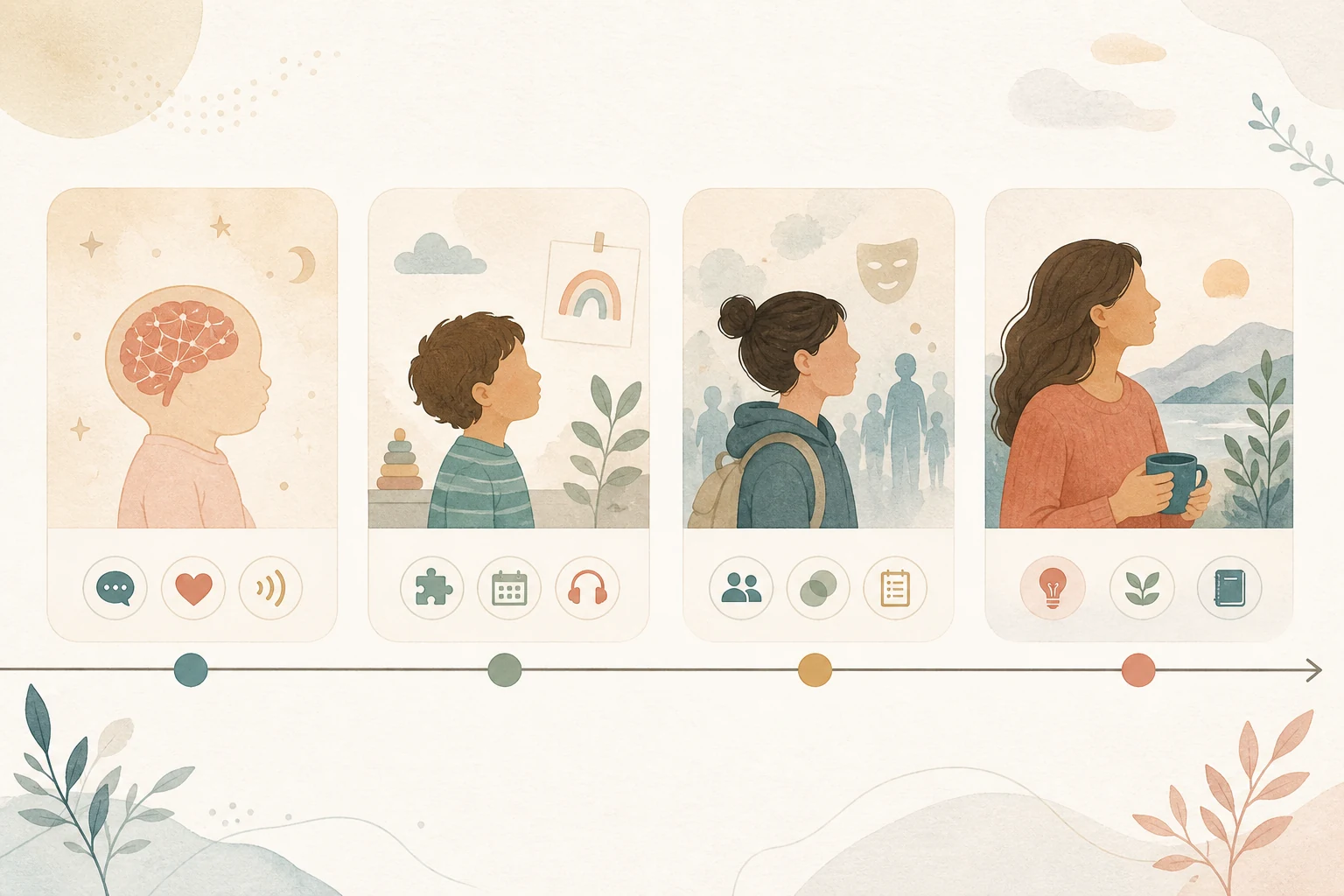
Autism spectrum disorder, often shortened to ASD, is described as developmental because its core patterns usually trace back to early life. These patterns involve social communication, sensory processing, routines, focused interests, repetitive movement, attention style, and ways of learning or responding to change. Some children show obvious differences early. Others meet milestones in a way that looks ordinary from the outside, especially if they are quiet, verbally skilled, eager to please, or good at copying social behavior.
That is why a person can reach adulthood before autism becomes a serious question. The traits may have been interpreted as shyness, perfectionism, anxiety, stubbornness, giftedness, sensitivity, or being "a little different." In many adults, the story is not "I became autistic." It is closer to "I finally found a framework that explains a long-running pattern."
Life can also raise the volume on traits that were easier to manage before. A new workplace may demand more small talk, brighter lighting, unpredictable meetings, and less recovery time. College may remove familiar routines. Parenthood may add constant sensory input. A major loss or trauma may reduce coping capacity. When the environment asks more than the nervous system can comfortably give, previously hidden differences can become much harder to ignore.
Can You Develop Autism From Trauma?
Trauma does not create autism in someone who was not already autistic. Autism and trauma can, however, overlap in confusing ways. Trauma can affect sleep, attention, emotional regulation, body awareness, social trust, and the sense of safety around other people. Autistic people can also experience trauma, sometimes because years of masking, bullying, sensory distress, invalidation, or unsupported school and workplace demands have been deeply stressful.
This is where careful language matters. If traits begin after a traumatic event, it is reasonable to explore trauma responses, anxiety, depression, burnout, ADHD, and other explanations with a qualified professional. If the person can trace sensory differences, social confusion, intense interests, repetitive self-regulation, or a lifelong need for sameness back into childhood, autism may be one possible framework to discuss.
The key distinction is timing. Trauma can change how someone functions now. Autism describes a developmental pattern that was present much earlier, even if nobody had the right words for it.

Can You Develop Autism Later in Life?
You can recognize autism later in life, receive a formal assessment later in life, and understand your past differently later in life. That is different from developing autism for the first time as an adult.
Late recognition is common for people whose traits were subtle, masked, or misunderstood. Some adults learned scripts for eye contact, jokes, greetings, or workplace small talk. Some copied peers so well that other people missed the effort behind it. Some grew up in families where similar traits were normal, so nobody saw them as notable. Others were evaluated for anxiety, depression, obsessive patterns, or ADHD first, while autism stayed out of view.
Autistic masking can make the question even more confusing. A person may appear socially capable while feeling exhausted, rehearsed, or disconnected inside. They may function well in structured settings but struggle when rules are vague. They may be praised for discipline while privately relying on rigid routines to stay regulated. AutisticQuiz.com includes a gentle autistic traits quiz experience for people who want to organize these patterns before deciding what kind of support or assessment might make sense.
It is also possible for traits to become more visible after burnout. Burnout can reduce the energy available for masking, transitions, sensory tolerance, and emotional regulation. That can feel sudden, but the underlying autistic profile may have been there all along.
What Causes Autism During Pregnancy and Early Development?
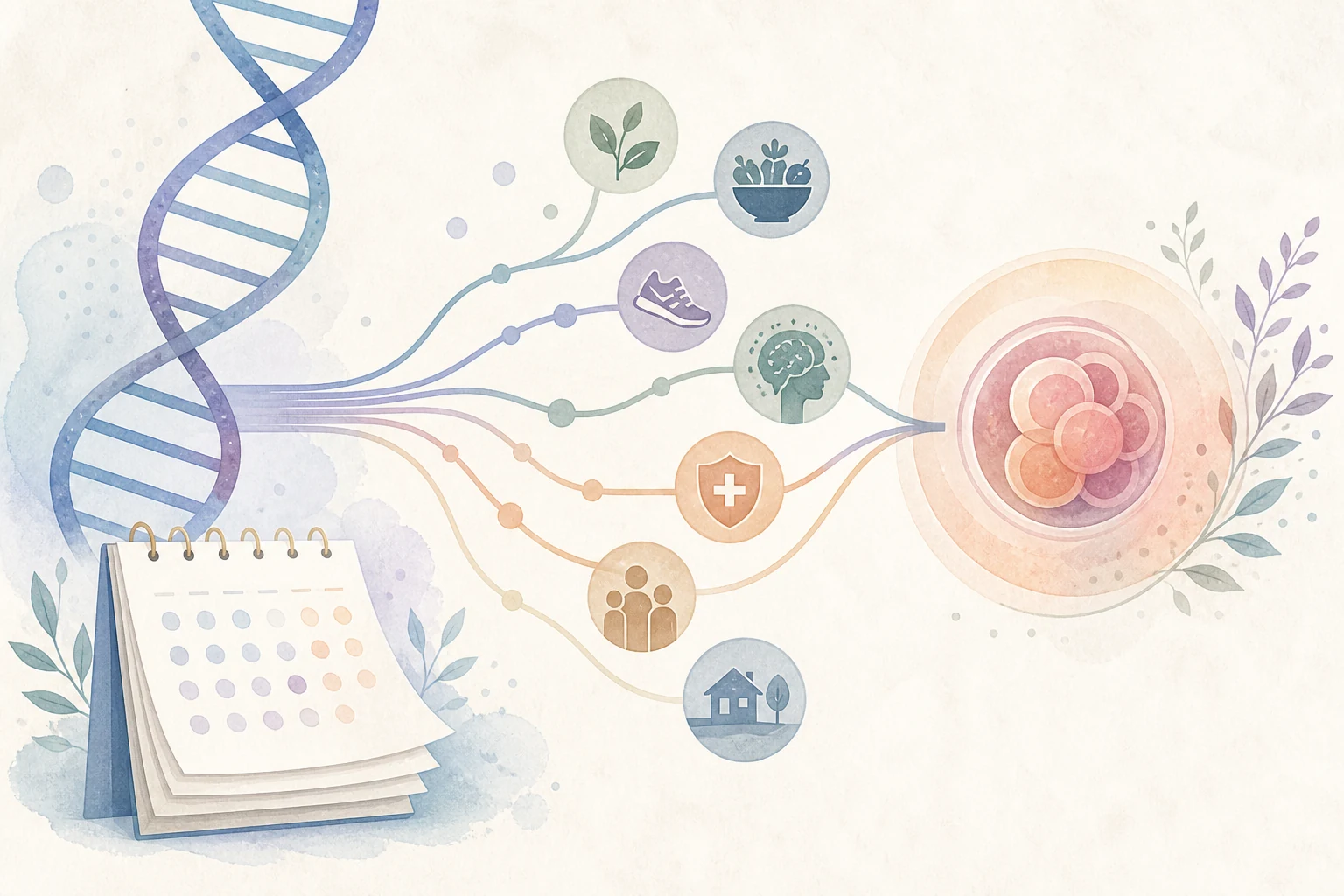
There is no single autism cause that applies to every person. Current research points to a complex mix of genetic, biological, and early developmental factors. For many autistic people, no one specific cause is ever identified, and that uncertainty should not be turned into blame.
Genetics play an important role. Autism tends to run in families, and some genetic or chromosomal conditions are associated with higher autism likelihood. But there is no single "autism gene" that one parent simply carries and hands down in a predictable way. Genetic influence can involve many common variants, rare variants, inherited patterns, or new genetic changes that occur in early development.
Environmental risk factors in autism research usually mean biological exposures or conditions around pregnancy, birth, and early development, not parenting style or emotional warmth. Studied factors include older parental age, very low birth weight, prematurity, some birth complications, maternal metabolic or immune conditions, and some prenatal exposures. These are risk factors, not simple explanations. Most people exposed to a risk factor do not have autism, and many autistic people have no clear known exposure.
So when people ask, "What are the 3 main causes of autism?" a safer answer is: there are three broad areas researchers study, not three direct causes. Those areas are genetics and family history, prenatal or biological developmental factors, and birth or early-life complications. Autism usually reflects interactions among multiple factors rather than one event.
What Autism Symptoms Usually Involve
Autism symptoms vary widely, so no checklist captures every autistic person. Still, most descriptions include two broad areas: social communication differences and restricted or repetitive patterns of behavior, interests, movement, or sensory response.
Social communication differences may include difficulty reading implied meaning, facial expressions, tone, body language, or unwritten social rules. Some autistic people speak very little, while others speak fluently but find back-and-forth conversation draining or confusing. Some prefer direct language. Some miss hints. Some need more time to process questions. Some have friendships but find group dynamics exhausting.
Restricted and repetitive patterns can include intense interests, a strong preference for routines, repeated movements, distress around unexpected change, or deep focus on details. Sensory differences are also common. Sound, light, texture, smell, temperature, pain, hunger, or movement may feel stronger, weaker, or simply different from what others expect.
People often ask about "the 3 main symptoms of autism." A practical three-part summary is social communication differences, repetitive or routine-based patterns, and sensory processing differences. That is only a learning shortcut. Autism is a spectrum, and traits show up differently across age, gender, culture, personality, support needs, and life context.
Adult Signs That Are Often Missed
In adults, autism may look less like an obvious childhood stereotype and more like a pattern of effort. A person may replay conversations for hours, study social behavior, over-prepare for ordinary interactions, avoid noisy environments, or need long recovery time after meetings. They may love deep information, notice tiny inconsistencies, or feel calm with routines that other people find overly precise.
Some adults describe being able to perform socially but not intuitively. They know what to do because they learned it deliberately. That can be useful, but it can also be tiring. Others describe sensory overload, shutdowns, repetitive self-soothing movements such as rocking, or a strong need for predictability. Rocking in autism is often a form of self-regulation, sometimes called stimming. It may help with focus, emotion, sensory input, or calming the body.
Here is a self-reflection checklist that can make the pattern clearer:
- Did similar traits exist in childhood, even if they were explained differently?
- Do social situations require conscious scripting or recovery time?
- Are sensory environments a major factor in mood or functioning?
- Do routines, predictability, or focused interests help you feel regulated?
- Do stress and burnout make long-hidden traits much more visible?
- Do trusted people remember early differences in communication, play, sensitivity, or routines?
This checklist cannot settle the question by itself. It can help you decide whether to learn more, track examples, or discuss your history with someone qualified to assess autism in adults.

What to Do If the Question Feels Personal
If "can you develop autism" feels personal, begin with your timeline rather than a label. Write down examples from childhood, school, friendships, sensory environments, routines, interests, work, relationships, and burnout. Look for patterns that repeat across settings and years. Also note what changed recently. Stress, trauma, grief, sleep loss, hormonal shifts, parenting, job demands, and unsupported environments can all affect how visible traits feel.
Next, keep the question broad enough to stay useful. Autism may be relevant, but so may trauma responses, ADHD, anxiety, depression, obsessive-compulsive patterns, learning differences, or ordinary stress overload. Many people have more than one thing going on. A thoughtful professional evaluation can help separate overlapping patterns and identify supports.
For a low-pressure first step, you can use a quiet first step for exploring autistic traits to reflect on social communication, masking, sensory patterns, and daily-life impact. Treat any online quiz as a conversation starter, not a final answer. If your concerns affect safety, work, school, relationships, or daily functioning, consider speaking with a clinician, therapist, or autism-informed assessment provider.
FAQ
Can a person suddenly develop autism?
No. Autism is understood as an early neurodevelopmental difference, not something that suddenly begins in adulthood. It can seem sudden when stress, burnout, trauma, or a major life transition makes long-standing traits more visible.
How do I tell if I'm autistic?
Start by looking for lifelong patterns in social communication, sensory processing, routines, focused interests, masking, and recovery after social demands. Online self-reflection tools can help organize your thoughts, but a formal assessment is the right path if you need clarity for care, accommodations, or major life decisions.
What are 12 signs of autism in adults?
Common adult signs can include social scripting, exhaustion after interaction, sensory overload, strong routines, intense interests, literal communication, difficulty with implied meaning, shutdowns, repetitive self-regulation, trouble with transitions, feeling different since childhood, and burnout after long-term masking. Not every autistic adult has all of these.
What is rocking in autism?
Rocking is one possible form of stimming, or repetitive self-regulating movement. For some autistic people, it helps manage sensory input, emotion, focus, or stress. It is not automatically harmful unless it causes injury or interferes with daily needs.
Who carries autism-related genes, mother or father?
Either parent can contribute genetic variants associated with autism likelihood, and some variants can arise newly during early development. There is no single autism gene carried by only one parent.
Can autism go away with treatment?
Autism is generally lifelong, but needs, skills, environments, and supports can change a great deal. Helpful support focuses on communication, daily functioning, sensory needs, mental health, autonomy, and quality of life rather than trying to erase who someone is.
What causes autism during pregnancy?
Researchers study many prenatal and early developmental factors, including genetics, parental age, maternal metabolic or immune conditions, prematurity, low birth weight, birth complications, and some exposures. These factors may increase likelihood in combination with genetics; they are not simple one-to-one causes.