Autistic Quiz: Differentiating Autism Traits from Social Anxiety
Feeling utterly drained after social events? Do you spend hours replaying conversations in your head, wondering if you said the right thing? If you're constantly lost in social situations and unsure why, you're not alone. Many people find themselves caught in a confusing overlap, asking, am I autistic? or is this simply social anxiety? This guide is here to help you navigate that confusion.
This journey of self-discovery can feel overwhelming, but understanding the crucial overlaps and differences between autistic social experiences and social anxiety is an empowering first step. It's about finding the language for your experience and discovering pathways to more authentic connection. Taking a moment for self-reflection with a self-discovery tool can be a gentle way to begin exploring these questions.
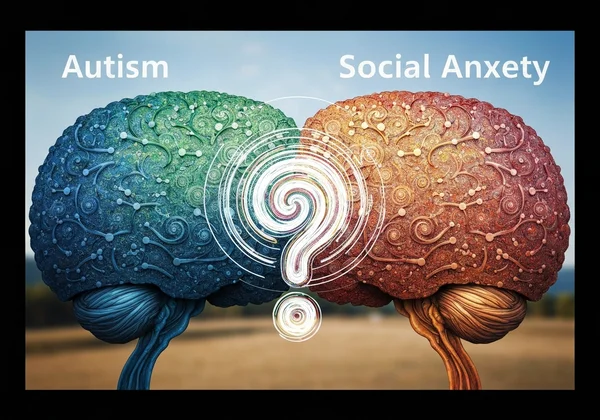
Understanding the Overlap: Autism and Social Anxiety
It's incredibly common for autism and social anxiety to be mistaken for one another or even to exist at the same time. The outward signs—like avoiding social gatherings or feeling awkward in conversations—can look almost identical. However, the internal experiences and underlying reasons for these behaviors are often vastly different. Let's dive into the basics.
What is Social Anxiety Disorder?
Social Anxiety Disorder (SAD) is driven by an intense, persistent fear of being watched and judged by others. This fear can be so overwhelming it leads to avoiding social situations. Someone with social anxiety might worry for weeks before an event, then spend hours scrutinizing their actions and perceived flaws afterward.
The core driver here is fear of negative evaluation. The internal monologue is often filled with "what ifs": "What if I say something stupid?" "What if they think I'm boring?" "What if I embarrass myself?" This constant fear of judgment is the engine behind the anxiety and avoidance.
What are Autistic Social Communication Differences?
For autistic people, social difficulties stem from a different way of processing social information, not from a fear of judgment. Autism is a neurotype, meaning the brain is wired differently. This results in a unique communication style that doesn't always align with neurotypical (non-autistic) expectations.
These differences might include taking things literally, finding small talk confusing, having a direct communication style, or struggling to interpret non-verbal cues like body language. The difficulty isn't about performance; it's about navigating a world with unfamiliar social rules.
Why Do Autism and Social Anxiety Often Co-Occur?
Here's where it gets a bit complex. Many autistic people develop social anxiety because of their autistic traits. Imagine spending your life trying to navigate social situations that feel unnatural, receiving negative feedback for being "too blunt" or "awkward," and consistently feeling like you've missed a crucial piece of information.
These repeated negative social experiences can understandably lead to a genuine fear of social interaction. In this case, the social anxiety is a secondary condition—a response to the challenges of being autistic in a neurotypical world. Untangling this is a key part of self-understanding, and an initial self-assessment can help highlight specific traits to explore.
Key Distinctions: Is it Autism, Social Anxiety, or Both?
To truly tell the difference, we need to look beyond outward behavior and ask: why is this happening? What is the internal motivation driving the social discomfort?
Core Motivations Behind Social Difficulties
The core motivation is perhaps the most significant differentiator. For someone with social anxiety, the primary driver is the fear of social judgment. They may understand the social rules perfectly well but are too afraid of breaking them to act naturally.
For an autistic person, the driver is often cognitive overload or confusion. They may not instinctively grasp social rules, leading to exhaustion from the mental effort of consciously analyzing and performing them. The stress comes from the work of translating, not the fear of an audience's review.
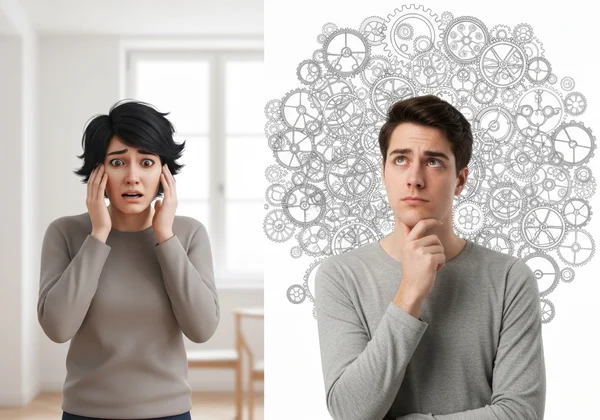
The Role of Autistic Masking vs. Anxiety-Driven Avoidance
Autistic masking (or camouflaging) is the conscious or subconscious process of hiding one's autistic traits to fit in with neurotypical peers. This can involve forcing eye contact, mimicking others' social behaviors, and suppressing natural tendencies like stimming (repetitive movements). Masking is an exhausting performance aimed at avoiding detection.
Anxiety-driven avoidance is about escaping the feared situation entirely. Someone with social anxiety might cancel plans or leave a party early to escape the feeling of being judged. An autistic person might also leave early, but more likely due to social or sensory burnout than fear. You can explore your traits further to understand if masking applies to you.
Sensory Processing and Social Discomfort
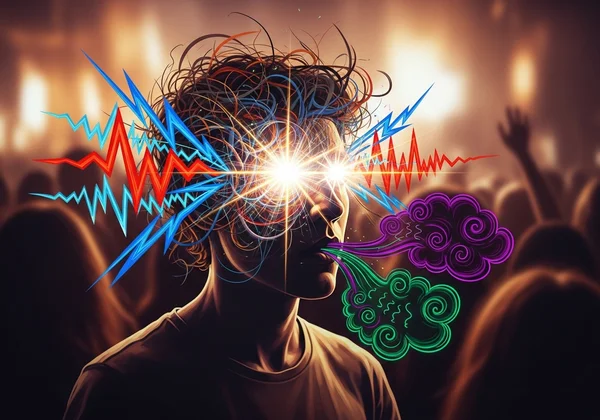
Sensory sensitivity is a core aspect of autism that is not a feature of social anxiety disorder. Social events are often sensory nightmares—loud music, bright lights, strong smells, and crowds. For an autistic person, this sensory overload can be physically painful and overwhelming.
This discomfort can easily be mistaken for anxiety. An autistic person might leave a concert because the flashing lights and noise are unbearable, not from worry about others' opinions. This sensory dimension is a crucial clue in differentiating the two experiences.
Impact on Daily Life and Relationships
Both conditions can significantly impact daily life, but in different ways. Social anxiety can make it difficult to perform tasks that involve scrutiny, like giving a presentation or making a phone call.
For autistic people, challenges are often broader, including routines, sensory experiences, and executive functioning. In relationships, the difference is key: a friend with social anxiety might be afraid to reach out for fear of being a bother, while an autistic friend might not reach out because they don't instinctively feel the social obligation to do so, even though they value the friendship deeply.
Navigating Social Worlds: Connecting with others as an autistic person
Regardless of whether you identify with autism, social anxiety, or both, your goal is likely the same: to find authentic, sustainable ways to connect with others. This isn't about "fixing" your social skills, but about creating a social life that honors your needs and energy levels.
Gentle Approaches to Socializing
Forget the pressure of big parties or networking events. Connection can be found in quieter, more structured ways. Consider "parallel activities," where the focus is on a shared interest rather than direct conversation, like watching a movie, playing a board game, or visiting a museum together. One-on-one interactions are often far less draining than group settings.
Prioritizing Your Social Energy & Preventing Autistic Burnout
Think of your social energy as a battery with a limited charge. Every interaction, especially those requiring masking, depletes it. Recognizing your limits is not a weakness; it's a vital self-preservation skill. Schedule downtime after social events to recharge. Learning to say "no" to invitations that you know will push you past your limit is essential for preventing autism social exhaustion and the profound exhaustion known as autistic burnout. An online autistic quiz can offer insights into how your energy is impacted.
Finding Your Neurodivergent Community
One of the most powerful and healing experiences can be connecting with other neurodivergent people. Finding a community where you don't have to mask, where your communication style is understood, and where your experiences are validated can be life-changing. You suddenly realize you aren't "broken"; you were just speaking a different language.
Gaining Clarity with an Autistic Quiz for Adults
Untangling the threads of autism and social anxiety is a personal journey of deep reflection. It's about shifting your perspective from "what's wrong with me?" to "what's true about me?". Understanding the root cause of your social difficulties—whether it’s a fear of judgment, a difference in processing, or a combination of both—is the first step toward self-acceptance and finding strategies that truly work for you.
This isn't about finding a label for its own sake, but about gaining a new vocabulary and a community of understanding. If what you've read here resonates deeply, your next step might be to gather more information about your own unique profile of traits.
While not a diagnostic tool, a scientifically-backed screening quiz can provide personalized insights and a structured starting point for your self-discovery. Are you ready to take that step? You can start your free quiz on our homepage and see what you discover.
Frequently Asked Questions About Autism, Social Anxiety, and Self-Discovery
Can social anxiety be a sign of autism?
Yes, absolutely. Many autistic people develop social anxiety as a direct result of navigating a world not built for them and experiencing social rejection or misunderstanding. However, it's important to remember that you can also have social anxiety without being autistic.
How does autistic masking differ from social anxiety avoidance?
Autistic masking is a performance strategy; it's about actively trying to appear neurotypical to fit in. Social anxiety avoidance is an escape strategy; it's about getting away from a situation that causes fear. Masking drains your energy by forcing you to do more socially, while avoidance is about doing less to escape fear.
Is there a free quiz to see if I'm autistic or just anxious?
While no online tool can provide a medical diagnosis, a reliable screening quiz can be an invaluable first step. It can help you identify specific autistic traits you may not have had the words for before. Our platform offers a confidential quiz online based on scientifically-validated questionnaires like the CAT-Q to help you gain clarity.
What are the best ways for an autistic person to connect socially?
The best ways often involve shifting the focus from traditional "socializing" to shared interests. Joining clubs or groups focused on your passions (e.g., hiking, coding, book clubs) allows connections to form naturally around an activity. Seeking out other neurodivergent people can also lead to more intuitive and less exhausting friendships.