Autistic Masking Quiz: Understand Your Traits with Our Autistic Quiz & Unmasking Guide
Do you often feel like you're putting on an act in social situations, constantly trying to fit in or appear "normal"? This exhausting experience, often described as autistic masking or camouflaging, is a common reality for many autistic individuals. If you've ever felt drained after socializing or wondered why interactions feel like a performance, you are not alone. This guide will delve into the concept of the autistic masking quiz, explore its profound impact, and offer gentle steps toward a more authentic life. If you're seeking to understand your traits, taking an autistic quiz can be a valuable first step.
For many, the first step towards understanding this experience is asking, What is autistic masking? It's a complex survival strategy involving consciously or unconsciously hiding one's natural autistic traits to be better accepted by a neurotypical world. While it can feel necessary, it comes at a significant cost. If you're ready to explore these patterns within yourself, an online autistic quiz can be a gentle starting point.

Understanding Autistic Masking & Camouflaging
Autistic masking, or camouflaging, is the process of learning, practicing, and performing neurotypical behaviors in social settings. It’s more than just being polite; it’s a constant, mentally taxing effort to suppress your authentic self. This can involve hiding behaviors that might be judged as "odd," such as stimming (repetitive movements), avoiding topics you're passionate about, or forcing yourself to engage in social norms that feel unnatural.
Many autistic people find this process is developed from a young age as a way to avoid bullying, make friends, or meet societal expectations. Over time, it can become so ingrained that a person may not even be aware they are doing it, only recognizing the profound exhaustion and sense of disconnect it causes.
What Does Autistic Masking Look Like in Daily Life?
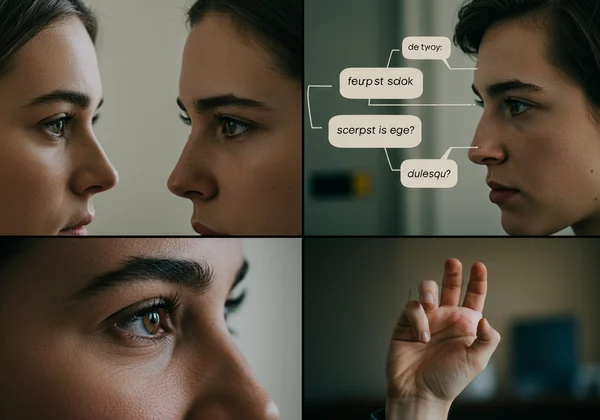
Recognizing masking in yourself can be the first step toward understanding. Camouflaging autistic traits isn't always obvious, but it often manifests in specific, everyday behaviors. You might be masking if you consistently:
-
Force or fake eye contact: You consciously remind yourself to look at people's eyes during conversation, even if it feels intense or uncomfortable.
-
Mimic others' social behaviors: You copy the gestures, facial expressions, and phrases of people around you to blend in.
-
Rehearse conversations: You script out potential dialogues in your head before social events or phone calls to prepare for every possible outcome.
-
Suppress stimming: You actively stop yourself from rocking, fidgeting, or making other self-soothing movements in public.
-
Hide special interests: You avoid talking about your passions for fear of being seen as obsessive or weird.
-
Endure sensory discomfort: You tolerate overwhelming lights, sounds, or crowds without complaint, leading to internal distress or a later shutdown.
The Psychological Drive: Why Autistic People Mask
The drive to mask stems from a fundamental human need for connection and acceptance. For many autistic people, their natural ways of communicating and being are often misunderstood or criticized. Social situations can become minefields of unspoken rules and potential rejection.
Masking becomes a shield, a way to navigate the world with less friction. The primary motivators include the desire to build relationships, succeed in academic or professional environments, and simply avoid the negative consequences of being different. While born from a need for safety, this constant performance mode disconnects a person from their true identity.
The Hidden Costs of Constant Camouflaging
While masking can feel like a necessary tool for survival, the long-term cost to one's well-being is immense. The energy required to maintain this facade day after day is unsustainable and often leads to severe consequences. If you find yourself perpetually exhausted, you might be interested in an autistic burnout quiz to explore your symptoms.

The pressure of constant self-monitoring and suppression creates a chronic state of stress. This isn't just about feeling tired; it's a deep, pervasive exhaustion that affects every aspect of life. This is why understanding the hidden costs is so crucial for anyone who suspects they might be masking.
Recognizing Autistic Burnout from Perpetual Masking
Autistic burnout is a state of profound physical, mental, and emotional exhaustion often experienced by autistic individuals. It is a direct result of the cumulative stress from navigating a world not designed for them, with masking being a primary contributor. It is far more severe than simple fatigue.
Signs of autistic burnout include:
- Chronic exhaustion that sleep doesn't resolve.
- Loss of skills (e.g., finding it harder to socialize, work, or manage daily tasks).
- Increased sensory sensitivity and a lower tolerance for stimuli.
- A feeling of being "stuck" or unable to think clearly.
- Heightened emotional responses or, conversely, feeling completely numb.
Impact on Mental Health, Identity, and Relationships
Beyond burnout, the psychological toll of masking is significant. Constantly pretending to be someone you're not can erode your sense of self. Many who mask report feeling like an imposter in their own lives, unsure of who they are beneath the layers of performance.
This can lead to serious mental health challenges, including anxiety disorders, depression, and a diminished sense of self-worth. It can also strain relationships, as true connection is difficult when one person is never fully present. Reclaiming your authentic self is a journey, and it often begins by acknowledging the mask itself. If this resonates with you, a screening tool can help you find some clarity.
Gentle Steps Towards Safely Unmasking
The idea of unmasking autism can be both liberating and terrifying. It’s a process, not an event, and it must be done at your own pace and in a way that feels safe. There is no right or wrong way to do it; the goal is to live more authentically and reduce the strain of masking.
Unmasking is about slowly allowing your true self to emerge in safe environments. It's about trading performance for presence and self-judgment for self-compassion. This journey is unique to each individual and requires patience and support.
Identifying Your Masking Triggers and Behaviors
The first step is self-awareness. Begin by gently observing yourself without judgment. Self-discovery often starts with asking simple questions. When do you feel most exhausted? Who are you with when you feel the need to "perform"?
Try keeping a simple journal. Note down situations where you felt you were masking. What specific behaviors did you use? What were you feeling? Identifying these patterns is a powerful step in regaining control and making conscious choices about where and when you use your energy.
Cultivating Environments for Greater Authenticity
You don't have to unmask everywhere all at once. Start small. Identify people and places where you feel safest and most accepted. This could be with a trusted friend, a partner, a therapist, or even just by yourself at home.
Practice letting go of one small masking behavior in a safe space. Maybe you allow yourself to stim freely while watching a movie or share a fact about your special interest with a friend. Cultivating these pockets of authenticity helps build the confidence to expand them over time and is a key part of self-advocacy.
Explore Your Autistic Traits: Take an Autistic Masking Quiz
After learning about masking, many people wonder, "How much am I actually doing this?" This is where a well-designed autistic quiz can be incredibly helpful. An autistic quiz for adults, specifically one focused on camouflaging, can provide a structured way to reflect on your experiences and see them in a new light.
Our platform offers scientifically-backed quizzes like the Camouflaging Autistic Traits Questionnaire (CATQ). These tools are designed to help you explore your own patterns of social behavior in a confidential and supportive way. The goal isn't diagnosis, but insight.

How an Online Autistic Masking Quiz Can Provide Insights
An online autistic quiz can act as a mirror, reflecting your own behaviors back to you through carefully constructed questions. It can give you the language to describe feelings you've had for years but couldn't name. For many, seeing their experiences quantified in a result can be incredibly validating.
It can confirm that you're not "just shy" or "awkward," but that you've been using complex coping strategies to navigate the world. This validation is a crucial step in reducing self-blame and beginning a journey of self-acceptance. Ready to see for yourself? You can try our quiz today.
What to Expect from Your Personalized AI Analysis Report
Unlike other sites that just provide a score, our platform offers something more. After completing a quiz, you have the option to receive a personalized AI analysis report. This unique feature transforms your results into meaningful, actionable insights.
The report provides a deeper understanding of your potential strengths, challenges, and how your traits might impact your daily life. It offers a compassionate perspective on your experiences, helping you connect the dots on your journey of self-discovery. It is the perfect next step for anyone seeking to understand their neurotype.
Embracing Your Authentic Self & Seeking Further Understanding
Understanding autistic masking is often a profound and life-changing revelation. It can explain a lifetime of exhaustion, social confusion, and feeling like an outsider. It opens the door to self-compassion and the possibility of a more authentic, sustainable way of living.
Remember, this is your journey. Whether you choose to seek a formal diagnosis or simply use this knowledge to improve your quality of life, understanding yourself is an act of empowerment. Our autistic quiz is designed to support that first step. Embracing your authentic, neurodivergent self is not about changing who you are, but about creating a life where you no longer have to hide. If you're ready to take the next step, start your journey on our homepage.
Frequently Asked Questions
What is the difference between autistic masking and camouflaging?
The terms autistic masking and camouflaging are often used interchangeably to describe the act of hiding autistic traits. "Camouflaging" is frequently used in academic research (like the CATQ), while "masking" is a more common term within the autistic community. Both refer to the same core experience of performing neurotypical behaviors to fit in.
Can an online autistic quiz tell me if I am autistic?
No, an online quiz cannot provide a medical diagnosis. These tools are for screening and self-exploration only. They can indicate whether you have traits associated with autism, which can be a valuable first step. For a formal diagnosis, it is essential to consult with a qualified healthcare professional. You can use our tools to explore your traits as a starting point for that conversation.
What are common signs of masking in autistic adults or women?
Masking can present differently in everyone, but common signs, particularly in autism in women and adults diagnosed later in life, include intense social exhaustion, developing a "public" versus a "private" persona, meticulously studying social interactions, and feeling a constant need to be "on." Many report high levels of anxiety and a persistent feeling of not fitting in, despite appearing socially capable on the surface.
How can I safely begin my unmasking journey?
Start slowly and prioritize your emotional safety. Begin by unmasking in spaces where you feel secure, such as at home or with a trusted friend. Identify one small masking behavior to let go of at a time. Practicing self-compassion is key; there will be moments of fear and discomfort, and that's okay. The goal is progress, not perfection.
What should I do after taking an autistic quiz?
After taking a quiz, take some time to reflect on your results. How do they make you feel? Do they resonate with your life experiences? You might consider sharing your report with a therapist or a trusted loved one. The results can serve as a powerful tool for self-understanding and can help you decide if you wish to seek a professional evaluation or simply use the insights to make your life more comfortable.