Autism Kids: A Parent's Guide to Signs, Support, and Next Steps
When parents search for autism kids, they are often trying to answer several questions at once: What does autism mean for a child? Which signs matter? What kind of support helps? And how worried should I be? A helpful answer should lower panic, not raise it. Autism is a neurodevelopmental difference that can affect communication, social interaction, sensory processing, play, learning, and routines. It is not a character flaw, a parenting failure, or something a child simply catches. If you are sorting through early concerns, a gentle autistic traits self-reflection resource can help you organize questions before you speak with a qualified professional.

What Autism Can Mean for Kids
Autism spectrum disorder describes a wide range of developmental patterns. Some autistic kids speak early and have strong academic skills. Some use few words, communicate with gestures or devices, or need more support in daily routines. Some love social connection but find the rules of conversation confusing. Others prefer predictable solo play and need extra time after busy situations.
The word spectrum does not mean a straight line from mild to severe. It means different combinations of strengths, needs, sensitivities, and support levels. A child might be highly verbal but overwhelmed by noise. Another child might need help with language but show deep visual memory, pattern recognition, or focused interests.
For parents, the most useful question is not "Is my child normal?" A better question is: "What helps this child communicate, feel regulated, learn, and participate with less stress?" That shift keeps the focus on support instead of labels alone.
Signs of Autism in Kids Parents May Notice
Autism symptoms in kids are usually discussed across a few broad areas. No single sign proves that a child is autistic, and many children show one or two traits for other reasons. Patterns across time, settings, and development are more important than one isolated behavior.
Common social communication signs can include limited back-and-forth interaction, not responding to name consistently, reduced pointing or showing, difficulty sharing interests, limited pretend play, unusual eye contact, or trouble reading facial expressions and tone. In older kids, signs may look like one-sided conversations, difficulty joining group play, literal interpretation of language, or exhaustion after social demands.
Repetitive behavior and routine-related signs can include lining up objects, repeating phrases, intense interests, distress when plans change, repetitive movements, or needing rituals to feel settled. Sensory signs can include strong reactions to sound, clothing tags, food textures, bright light, smells, or busy environments. Some kids seek sensory input through movement, pressure, spinning, jumping, or chewing.
Parents often ask about the "three main symptoms of autism." A practical way to think about this is: social communication differences, restricted or repetitive patterns, and sensory or regulation differences. Clinical criteria are more detailed, but these three buckets can help parents notice patterns without turning everyday behavior into a checklist.
Why Autism Looks Different From Child to Child
Autistic kids do not all look, speak, play, or learn the same way. Age matters. Early signs may involve eye contact, gestures, response to name, babbling, or pretend play. In school-age children, signs may become clearer when friendships, transitions, classroom noise, group instructions, and homework demands increase.
Gender, personality, language ability, anxiety, ADHD, learning differences, and family culture can also shape what parents see. Some children mask their discomfort at school and release it at home. Some seem fine in structured settings but struggle during recess, birthday parties, assemblies, haircuts, dental visits, or clothing changes. Some autistic kids are affectionate, imaginative, funny, and socially motivated, which can make parents doubt their own observations.
When families ask what causes autism in kids, the most balanced answer is that autism is linked to differences in early brain development and is influenced by many factors, including genetics. There is no single known cause that explains every child. It is also not caused by cold parenting, a lack of discipline, or a child choosing to be difficult.
Parents also ask why more kids have autism now. Better awareness, broader screening, changes in identification practices, and improved access for some communities all play a role in why more children are being recognized. In the United States, recent CDC surveillance estimates have identified autism in about 1 in 31 children aged 8 in monitored communities. That number describes identified prevalence, not a simple answer to why any one child is autistic.
Support That Helps Autistic Kids at Home and School
Support works best when it is built around the child in front of you. Some kids need speech and language support. Some need occupational therapy for sensory and daily living skills. Some benefit from structured teaching, visual schedules, social stories, communication devices, parent coaching, or school accommodations. The right mix depends on the child's age, strengths, communication style, safety needs, learning profile, and family priorities.
An autism test for kids online can never replace a formal evaluation, but it may help parents organize observations and language. If your family is also exploring autistic traits in the wider household, a private first step for understanding autistic traits can support reflection while keeping the boundary clear: online tools are educational, not a substitute for professional care.
At home, start with practical supports:
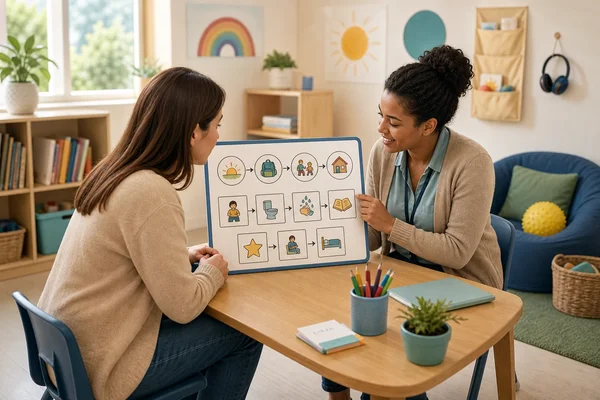
- Use visual routines for mornings, bedtime, school bags, and transitions.
- Give warnings before changes, such as "five minutes, then shoes."
- Offer choices when possible, such as two shirts, two snacks, or two calming activities.
- Reduce avoidable sensory stress before expecting flexible behavior.
- Describe expectations clearly instead of relying on hints.
- Notice what helps your child recover after overload.
At school, helpful supports might include a quieter workspace, movement breaks, written instructions, predictable routines, sensory tools, social communication goals, or an individualized education plan when eligible. The aim is not to make a child appear less autistic. The aim is to help the child access learning, communication, safety, friendships, and daily participation.
Toys, Activities, and Social Stories for Kids With Autism
Searches for autism kids toys, sensory toys for kids with autism, and best toys for kids with autism usually come from a good place: parents want something that helps. The best choice is not always the product with the most autism-focused marketing. It is the item that matches your child's regulation needs, interests, motor skills, and safety level.
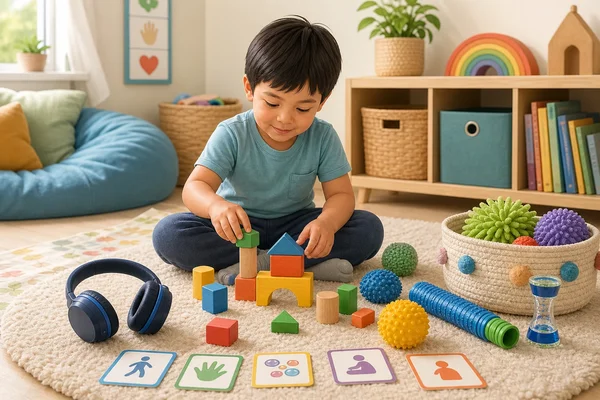
Sensory toys can include chew-safe jewelry, textured fidgets, weighted lap pads used with guidance, swings installed safely, soft lighting, noise-reducing headphones, or tactile bins. For some children, these tools support calm attention. For others, they become distractions. Watch how your child responds before assuming a toy is helpful.
Activities for kids with autism can include building sets, puzzles, drawing, music, swimming, movement games, nature walks, cooking steps, matching games, or interest-based projects. Sports can work well when coaches understand communication needs and sensory load. Swimming lessons can be valuable for enjoyment and safety, but families may need instructors who can adapt pace, language, and transitions.
Social stories for kids with autism can help explain what will happen in a situation: a haircut, dentist visit, school trip, birthday party, or new classroom. Keep the story concrete and respectful. Use simple sentences, real photos when helpful, and a calm ending that tells the child what they can do if they feel overwhelmed.
When to Ask for More Help
You do not need to wait until every sign is obvious before asking questions. Consider speaking with your child's pediatrician, school team, or a developmental specialist if you notice delayed speech, loss of skills, frequent distress around transitions, limited response to name, intense sensory reactions, safety concerns, self-injury, severe sleep disruption, or ongoing difficulty participating in daily life.
Before an appointment, bring a short observation note:
- What you are seeing.
- When it happens.
- What helps.
- What makes it harder.
- What your child does well.
- Questions you want answered.
This kind of note is often more useful than a long list of internet symptoms. It shows patterns, context, and strengths. If your child is in school or childcare, ask educators what they notice in play, transitions, group instruction, peer interaction, and sensory-heavy settings.
If a professional recommends evaluation, remember that the goal is not to reduce your child to a label. A good evaluation can clarify support needs, guide services, and help adults understand the child's communication and regulation. If a child is not autistic, the process may still reveal other useful explanations, such as language delay, anxiety, ADHD, learning differences, hearing concerns, or sensory processing challenges.
A Gentle Next Step for Parents
Learning about autism in kids can feel emotional because it touches identity, family expectations, school plans, and the future. Try to move one step at a time. Observe your child with warmth. Write down patterns. Ask for developmental screening or a formal evaluation when concerns persist. Choose supports that make daily life safer, clearer, and kinder.
If you are also reflecting on autistic traits in yourself, a partner, or your broader family context, AutisticQuiz.com offers gentle self-reflection tools for autistic traits. Use them as a calm educational starting point, not as a final answer. For a child, professional guidance remains the right path when developmental concerns affect communication, learning, safety, sleep, or everyday participation.

FAQ
What are the signs of an autistic child?
Signs can include social communication differences, repetitive movements or speech, strong routines, intense interests, sensory sensitivities, delayed speech, difficulty with pretend play, or distress during transitions. Some autistic kids are very verbal and affectionate, so parents should look for patterns rather than one stereotype.
Can an autistic child have a normal life?
Many autistic children grow into fulfilling lives with relationships, learning, work, creativity, and community. The word normal is less helpful than supported. Outcomes vary because autistic kids have different abilities, health needs, communication styles, and environments. Acceptance, early support, practical accommodations, and respectful expectations can make a major difference.
What are the behaviors of autism?
Autism-related behaviors may include lining up toys, repeating phrases, rocking, hand-flapping, avoiding or seeking eye contact, focusing deeply on favorite topics, resisting sudden changes, seeking pressure or movement, or reacting strongly to sound, smell, texture, or light. These behaviors often communicate a need, preference, stress level, or way of self-regulating.
What are the behavioral issues of autism?
Challenging behaviors can include meltdowns, aggression, self-injury, bolting, refusal, sleep disruption, or intense distress. These behaviors are not simply "bad behavior." They may reflect overload, pain, communication frustration, anxiety, unmet sensory needs, or unclear expectations. Safety comes first, and persistent concerns deserve professional support.
How many kids have autism?
In recent U.S. CDC surveillance data, about 1 in 31 children aged 8 in monitored communities had been identified with autism. This estimate can change over time and does not mean every community has the same rate. It reflects identified prevalence across specific surveillance sites.
Are kids born with autism?
Autism is related to early brain development, and many signs appear in the first years of life. Some children show clear early differences, while others are recognized later when social, language, school, or sensory demands increase. Parents do not cause autism by loving, feeding, teaching, or disciplining the "wrong" way.
Is there an autism test for kids online?
Online screeners can help parents organize concerns, but they cannot provide a formal clinical answer. If you are worried about your child's development, talk with a pediatrician or qualified specialist and ask about developmental screening, autism-specific screening, and a full evaluation when appropriate.
Do kids with autism have trouble sleeping?
Some autistic kids do have sleep challenges, including difficulty falling asleep, night waking, early waking, or bedtime distress. Sleep can be affected by anxiety, sensory discomfort, routines, medical issues, or communication needs. Persistent sleep problems are worth discussing with a healthcare professional.