Autism in Adults: Signs, Diagnosis & The Autistic Quiz Experience
Do you often feel like you're operating on a different wavelength from everyone else? Have social interactions always felt like a script you had to memorize, leaving you exhausted? If so, you're not alone. Many people are discovering later in life that these persistent feelings may be signs of autism in adults. This journey of self-discovery can be confusing, but it's also a path toward profound self-understanding and acceptance. How do I know if I am autistic? This guide is your starting point, exploring the common traits, the emotional landscape of a late diagnosis, and the ways to thrive as a neurodivergent adult.
This process begins with curiosity. For many, a simple, confidential autistic quiz can be the first step in putting a name to a lifetime of experiences. It provides a structured way to explore your traits and gain insights that can illuminate your path forward.
Recognizing the Signs of Autism in Adults
Autism isn't just a childhood condition; it's a lifelong neurotype. In adults, the signs can be more subtle than in children, often masked by years of learned coping mechanisms. Understanding these signs is the first step toward clarity. The traits often fall into several key areas of experience.
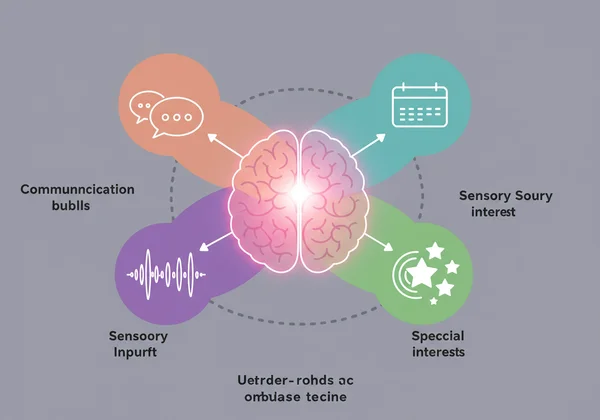
Social Communication and Interaction Differences
For many autistic adults, social interaction doesn't feel intuitive. It can be a constant mental calculation of what to say, how to stand, and when to make eye contact. This can manifest as difficulty with small talk, which may feel pointless or confusing. You might prefer deep, meaningful conversations on topics you're passionate about.
Autistic communication is often direct and honest, which can sometimes be misinterpreted by others as blunt or rude. You may also find it challenging to read non-verbal cues like body language or tone of voice, or you might take things very literally. After social events, you may feel completely drained, a phenomenon known as a "social hangover."
Repetitive Behaviors and Special Interests (Passions)
The autistic brain often finds comfort in predictability and routine. This can look like eating the same meals, taking the same route to work every day, or feeling distressed when plans change unexpectedly. Repetitive movements, known as "stimming" (e.g., tapping fingers, rocking, or fidgeting), are a common way to self-soothe or manage overwhelming sensory input.
A hallmark of autism is having deep, passionate, and highly focused interests, often called special interests. These are more than just hobbies; they are a source of immense joy, expertise, and comfort. Whether it's ancient history, a specific TV show, or coding, these passions are an integral part of an autistic person's identity and well-being.
Sensory Sensitivity and Processing Challenges
Living in a world not designed for your sensory profile can be overwhelming. Autistic individuals often experience either hypersensitivity (over-responsiveness) or hyposensitivity (under-responsiveness) to sensory stimuli. This can include a heightened sensitivity to bright lights, loud noises, strong smells, or certain textures of food and clothing.
This sensory overload can lead to anxiety and a need to withdraw to a quiet, controlled environment. Conversely, some may be under-sensitive and seek out strong sensory input, like loud music or spicy foods. Understanding your sensory needs is a crucial part of self-care.
Executive Functioning and Emotional Regulation
Executive functioning refers to the brain's "management" skills, such as planning, organizing, initiating tasks, and managing time. Many autistic adults struggle in this area. You might find it incredibly difficult to start a task (autistic inertia) even if you want to do it, or you may struggle to switch between tasks.
Emotional regulation can also be a challenge. Autistic individuals often feel emotions very intensely, but may have difficulty identifying or expressing them. This can lead to feeling overwhelmed by emotions, resulting in meltdowns or shutdowns when things become too much.
The Journey of Late Diagnosis Autism
Receiving or suspecting an autism diagnosis in adulthood is a unique and often life-altering experience. It's not about finding something "wrong" with you; it's about discovering the true operating system of your brain. This journey is filled with a complex mix of emotions and revelations.
Why Autism is Often Missed, Especially in Women
For decades, autism was primarily studied in young boys, leading to a skewed understanding of its presentation. Many adults, especially women and those assigned female at birth, went undiagnosed because their traits didn't fit the stereotypical mold. This is largely due to autistic masking or camouflaging.

Masking is the conscious or subconscious effort to hide autistic traits to fit in with neurotypical peers. This can involve forcing eye contact, mimicking social behaviors, scripting conversations, and suppressing stims. While a powerful survival tool, it is mentally and emotionally exhausting and is a primary reason many seek an am i autistic quiz female. The constant performance can lead to a lost sense of self.
The Emotional Impact of Discovering You're Autistic
Realizing you might be autistic is rarely a single "aha!" moment. It's often a cascade of them, where past struggles and misunderstood moments suddenly click into place. The primary emotion is often relief—an overwhelming sense of validation that you're not broken, just different.
However, this relief can be accompanied by grief for the past you, who struggled without understanding or support. There may be anger at a system that missed the signs. It's a process of re-evaluating your entire life through a new lens. This journey is valid, and every emotion you feel is a legitimate part of it.
First Steps: From Self-Discovery to Seeking Clarity
If you see yourself in these descriptions, your journey of self-discovery has already begun. The next step is to seek more clarity in a way that feels safe and comfortable for you. For many, a formal diagnosis can be expensive and inaccessible. This is where scientifically-backed online screening tools can be invaluable.
An autistic test quiz like the CAT-Q (Camouflaging Autistic Traits Questionnaire) can provide structured, personalized insights into your experiences. It's a low-pressure way to explore your traits and receive information that can help you decide on your next steps, whether that's further research, seeking community, or pursuing a professional assessment.
Living and Thriving with Autism as an Adult
Understanding you're autistic isn't an endpoint; it's a new beginning. It's an opportunity to redesign your life in a way that honors your neurotype, minimizes stress, and maximizes your strengths and joy. It's about shifting from merely surviving to truly thriving.
Understanding Autistic Burnout and Masking
Two of the biggest challenges for late-diagnosed autistic adults are burnout and unmasking. Autistic burnout is a state of profound physical, mental, and emotional exhaustion caused by the cumulative stress of navigating a neurotypical world. It's more than just being tired; it's a shutdown of your system from prolonged masking and sensory overload. Recognizing the signs of burnout is the first step to recovery.
Learning to unmask is a gradual process of allowing your authentic self to emerge. It means letting yourself stim, honoring your sensory needs, and communicating in a way that feels natural to you. This is a journey of self-compassion, and tools like an autistic masking quiz can help you understand the extent to which you've been camouflaging.
Embracing Your Strengths and Neurodiversity
Autism is not a collection of deficits; it's a different way of thinking and being that comes with a unique set of strengths. Many autistic people have a strong sense of justice, are incredibly loyal, and possess an exceptional ability to focus deeply on their passions (hyperfocus). Other strengths include logical thinking, pattern recognition, and a creative, out-of-the-box perspective.
Embracing neurodiversity means accepting that there is no one "right" way for a brain to work. Your autistic brain is a natural and valuable variation of the human mind. Learning to celebrate your strengths is a powerful act of self-acceptance.
Building a Supportive Environment and Community
You don't have to navigate this journey alone. Building a supportive environment is key. This means setting boundaries to protect your energy, creating sensory-friendly spaces in your home, and communicating your needs to trusted loved ones.
Connecting with the autistic community can be life-changing. Finding other people who share your experiences provides a powerful sense of belonging and validation. Online forums, social media groups, and local meetups can be incredible sources of information, friendship, and mutual support.
Begin Your Journey of Self-Understanding Today
Understanding that you may be autistic is a profound step toward living a more authentic and fulfilling life. It's about giving yourself permission to be who you truly are. Recognizing the signs, acknowledging the emotional journey, and learning to thrive with your unique neurotype is a path of empowerment.
Your experiences are valid, and your quest for answers is important. If this guide has resonated with you, the next step is yours to take. Begin your confidential journey of self-discovery today. An autistic quiz for adults can offer the personalized insights you need to move forward with confidence and clarity.
Your Autistic Quiz Questions Answered
How do I know if I am autistic?
If you consistently relate to the core traits—such as differences in social communication, a need for routine, deep special interests, and sensory sensitivities—it may point towards autism. A great starting point is to document your experiences and consider taking a scientifically-backed screening tool. An online autistic quiz can help organize your thoughts and provide a preliminary indication of your traits.
Can an online quiz diagnose autism?
No, an online quiz cannot provide a medical diagnosis. It is crucial to understand that our online screening tools are for self-screening and informational purposes only. They are designed to help you explore your traits and gain personal insight. A formal diagnosis can only be given by a qualified healthcare professional, such as a psychologist or psychiatrist.
What should I do after taking an autistic quiz?
After taking a quiz, take time to reflect on the results. Do they resonate with your life experiences? You can use this information as a springboard for further action. This might include reading books by autistic authors, joining online autistic communities to hear from others, or deciding to seek a formal assessment from a professional. Whatever you choose, it's the next step in your personal journey to get personalized insights.