Autism DSM-5 Criteria Explained for Adults, Women, Levels, and Tests
Autism DSM-5 criteria can feel confusing because they are written for clinicians, not for everyday self-understanding. Still, the framework can help you understand what professionals look for during an autism assessment: long-running social communication differences, restricted or repetitive patterns, early-life signs, real-life impact, and careful ruling out of other explanations. If you are comparing your experiences with the criteria, an autistic traits self-reflection tool can help you organize observations before a conversation with a qualified professional. It should not be treated as a clinical answer. Think of it as a private first step for noticing patterns, choosing clearer language, and deciding whether a formal assessment or support conversation would be worth exploring.

What the DSM-5 Criteria Are Looking For
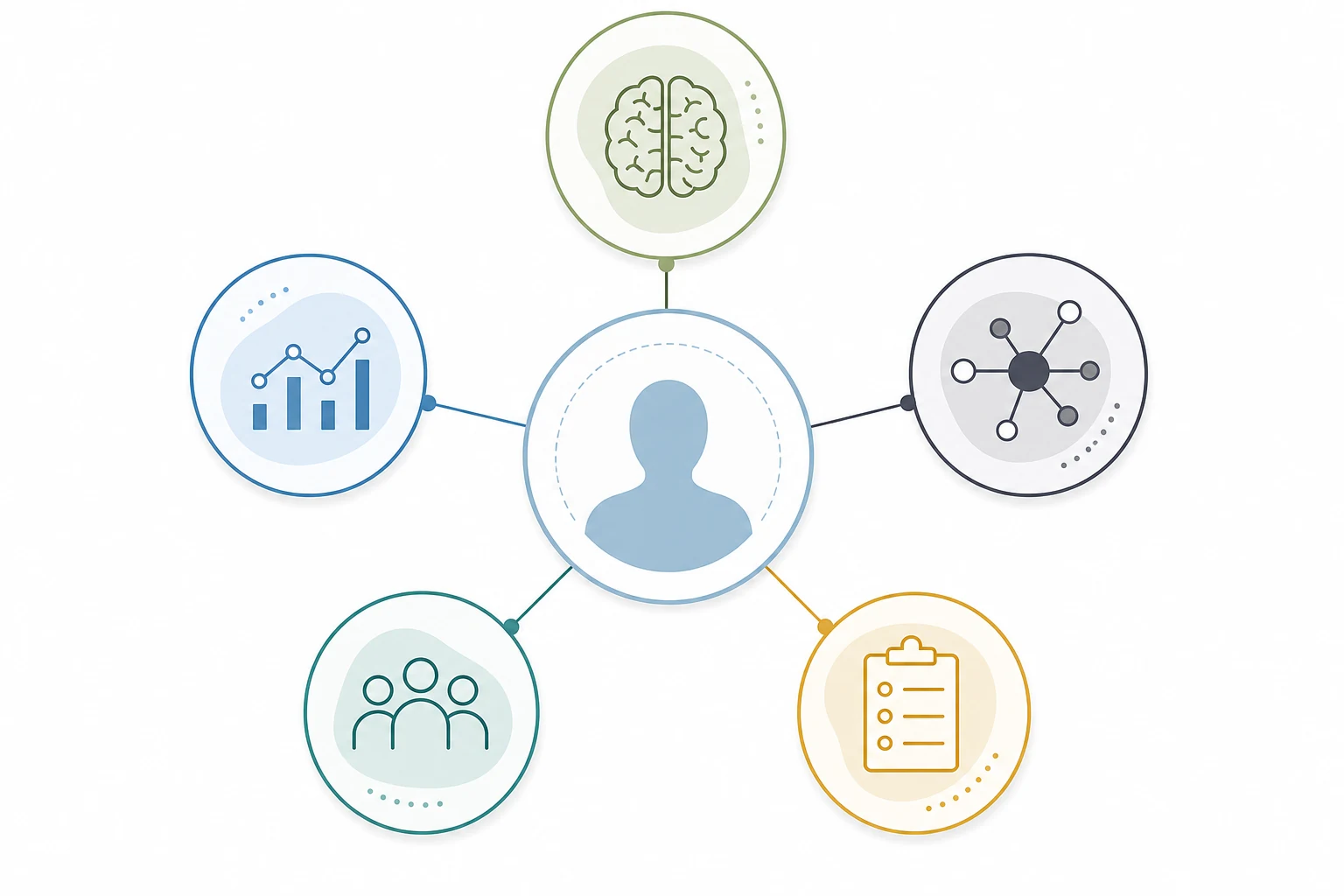
The DSM-5 groups autism spectrum disorder into five broad criteria, often called A through E. The first two are the core areas most people notice: social communication and interaction differences, and restricted or repetitive patterns of behavior, interests, or sensory experience. The other criteria ask whether the pattern was present from early development, affects daily life in meaningful ways, and is not better explained by intellectual disability or global developmental delay alone.
That structure matters because autism is not assessed from one habit, one score, or one awkward social period. A clinician looks for a consistent pattern across contexts and over time. For a child, that may involve caregiver history and direct observation. For an adult, it may involve childhood memories, school reports, family interviews, workplace history, sensory patterns, relationships, and the ways a person may have learned to mask.
Criterion A covers social communication and interaction
Criterion A is about persistent differences in social communication and social interaction across multiple contexts. DSM-5-TR clarified this area by making the threshold more explicit: all three social-communication areas are considered, not just one.
In plain English, clinicians look at three connected areas:
- Social-emotional reciprocity, such as the back-and-forth rhythm of conversation, sharing interests, or responding to another person's emotions.
- Nonverbal communication, such as using and reading eye contact, gestures, facial expression, body language, and tone in a socially expected way.
- Developing, maintaining, and understanding relationships, such as adjusting behavior across settings, navigating friendship, or understanding social expectations.
These examples are not a checklist where every item has to look the same for everyone. Some autistic people speak fluently, build deep relationships, and still experience a persistent mismatch between their natural communication style and the social rules around them.
Criterion B covers repetition, routines, interests, and sensory patterns
Criterion B is about restricted or repetitive patterns of behavior, interests, or activities. The DSM-5 framework asks for at least two of four areas: repetitive movement or speech, strong need for sameness or routines, highly focused interests, and sensory differences such as intense sensitivity or unusually low sensitivity to sound, texture, light, pain, temperature, smell, or movement.
In real life, this may look like stimming, repeating phrases, following routines with high distress when they change, spending deep energy on a focused interest, needing predictable transitions, or having sensory responses that shape daily choices. These patterns may be supportive, regulating, joyful, stressful, or all of those at different times. Good assessment does not treat every pattern as a problem by default; it asks how the pattern functions and how it affects life.
Criteria C, D, and E add history, impact, and differential thinking
Criterion C asks whether symptoms were present in the early developmental period. For adults, this is often the part that needs nuance. Traits may not have been recognized in childhood, especially if the person was quiet, high-achieving, heavily supported, or skilled at copying social rules. The DSM wording allows for traits that become clearer later when social demands exceed capacity or when learned strategies no longer work well.
Criterion D asks whether the pattern causes clinically significant impairment in social, occupational, or other important areas of life. This does not mean a person has no strengths. It means the pattern has enough real-world impact to matter.
Criterion E asks clinicians to consider whether the pattern is better explained by intellectual disability or global developmental delay. Autism can co-occur with many conditions, but careful assessment looks at what each explanation accounts for.
DSM-5-TR, Codes, and Autism Levels
Many searches for autism DSM 5 criteria also ask about the DSM-5-TR, the criteria code, and autism levels. The DSM-5 was released in 2013. The DSM-5-TR, published in 2022, kept the same overall autism spectrum disorder framework while clarifying Criterion A wording so the social-communication threshold was less likely to be misread.
The DSM code commonly associated with autism spectrum disorder is 299.00, with the ICD-10-CM code F84.0 often shown alongside it in clinical and insurance contexts. A code is administrative language; it is not a description of a whole person.
DSM-5 autism levels describe support needs. Level 1 means "requiring support," Level 2 means "requiring substantial support," and Level 3 means "requiring very substantial support." These levels are not moral rankings, ability labels, or fixed identity categories. They are intended to help describe the amount of support someone may need in social communication and restricted or repetitive behavior domains.
The phrase "mild autism" can be misleading. A person described as Level 1 may live independently and still use enormous effort to manage sensory load, transitions, social expectations, executive functioning, burnout risk, or masking. Another person may need substantial daily support and still have strong skills, preferences, relationships, and self-advocacy. Support level should lead to better accommodation, not smaller assumptions.

How Autism DSM-5 Criteria Apply to Adults and Women
Autism DSM-5 criteria adults searches often come from people who are revisiting childhood through an adult lens. They may have built careers, relationships, or parenting roles while privately feeling that everyday social and sensory demands take more effort than other people seem to notice. Adult assessment usually has to reconstruct the developmental pattern rather than rely only on what is visible in a short appointment.
This is especially important for women and other people whose traits may have been missed because they learned to camouflage. Camouflaging can include copying facial expressions, rehearsing conversations, suppressing stims, forcing eye contact, studying social scripts, or hiding sensory distress until later. The DSM-5 language about traits becoming clearer when social demands exceed capacity is one reason adult histories matter.
An adult autistic traits quiz can be useful as a reflection aid when it helps someone name patterns such as masking, sensory stress, routines, focused interests, or social recovery time. It is not a substitute for a formal autism assessment, but it can make a first conversation more organized. If you pursue professional evaluation, it can help to bring examples from several settings: childhood, school, work, family life, friendships, sensory environments, and times when masking became harder to maintain.
Adult women may need examples beyond stereotypes
The DSM criteria do not create separate rules for women. The challenge is that examples often used in public conversation may lean toward stereotypes. Adult women may have intense interests that look socially acceptable, friendship patterns that appear functional from the outside, or years of practiced scripts that hide the effort behind interaction. They may also be more likely to have anxiety, burnout, eating issues, or chronic people-pleasing discussed before autism is considered.
This does not mean every exhausted or socially careful adult woman is autistic. It means a good criteria-based assessment should ask better questions: What was the pattern over time? What happens after social performance? How much conscious effort is required? Are sensory and routine needs present? Were there early signs that became less obvious because the person learned to compensate?

A Checklist Way to Read the Criteria Without Self-Labeling
People often search for a DSM-5 autism criteria checklist because the official language is dense. A checklist can help you sort examples, but it should not be used as a verdict. The safer use is to gather observations and notice whether they form a long-running pattern.
Try this reflection format:
| Area to reflect on | Everyday examples to collect |
|---|---|
| Social reciprocity | Conversation rhythm, sharing interests, responding to emotion, feeling out of sync |
| Nonverbal communication | Eye contact, facial expression, gestures, tone, body language, reading others |
| Relationships | Friendship rules, group settings, role changes, social recovery time |
| Repetition and routines | Stims, repeated phrases, rituals, transitions, distress around sudden change |
| Focused interests | Depth, intensity, time spent, comfort, identity, learning patterns |
| Sensory patterns | Sound, light, texture, food, smell, movement, pain, temperature |
| Developmental history | Childhood traits, school reports, family memories, early coping strategies |
| Daily-life impact | Work, study, relationships, self-care, burnout, accommodations, support needs |
This approach helps separate "I relate to one example" from "there is a consistent pattern across several criteria." It also respects the fact that autism can look different across age, culture, gender, language, family expectations, and support level.
What an Autism DSM-5 Criteria Test or Quiz Can and Cannot Do
An autism DSM 5 criteria test search often mixes two very different needs. One need is clinical: "Could I meet formal criteria?" The other is personal: "Can I understand myself better before asking for help?" Online quizzes belong mainly to the second need.
A quiz can help you slow down and notice repeated patterns. It can offer language for traits, masking, sensory load, routines, and social recovery. It can also help you decide what to discuss with a clinician, therapist, coach, partner, or trusted support person. The best use is reflective and low-pressure.
A quiz cannot review your full developmental history, observe behavior across settings, compare overlapping explanations, assess support needs, or decide whether DSM-5 criteria are met. Conditions such as ADHD, anxiety, trauma, language differences, intellectual disability, sensory processing differences, and social communication disorder may overlap with parts of the picture. A qualified professional can consider those possibilities in context.
That boundary is not a weakness. It is what keeps self-exploration humane. You can use a quiz to gather language and confidence without turning one score into a life sentence.
Turning Autism DSM-5 Criteria Into a Calm Next Step
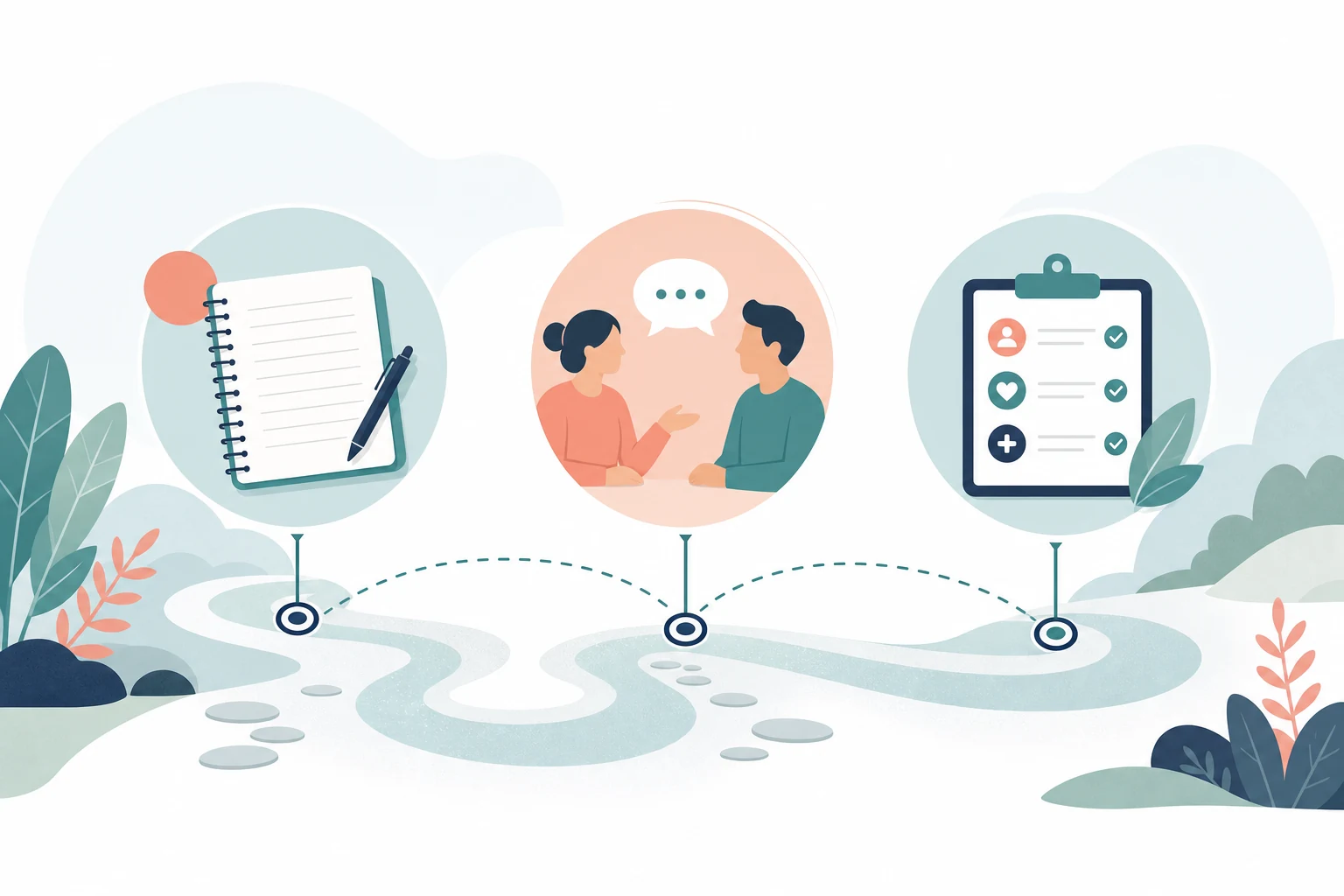
The most helpful way to use autism DSM-5 criteria is not to force an instant label. It is to translate broad clinical language into clear examples from your life. You might write down sensory patterns, routines, social effort, childhood memories, burnout cycles, masking strategies, and the supports that already help. You might ask someone who knew you as a child what they remember. You might also note strengths: deep focus, honesty, pattern recognition, loyalty, creativity, or careful problem solving.
If you want a gentle place to begin, private autism self-exploration can help you organize your thoughts before deciding whether to seek formal assessment. Keep the next step proportionate: reflect, document examples, consider professional guidance if the pattern affects daily life, and look for supports that reduce strain now. You do not have to wait for perfect certainty to take your needs seriously.
FAQ
What are the DSM-5 criteria for autism in simple terms?
In simple terms, the DSM-5 looks for persistent social communication and interaction differences, at least two restricted or repetitive behavior or sensory-pattern areas, early developmental presence, meaningful daily-life impact, and careful consideration of other explanations.
What changed in the DSM-5-TR autism criteria?
The DSM-5-TR kept the overall autism spectrum disorder framework but clarified Criterion A. The wording now makes it clearer that all three social communication and interaction areas are part of the threshold.
How is autism assessed in adults?
Adult assessment usually combines developmental history, current examples, interviews, questionnaires, and professional judgment. For adults who mask, the process may explore childhood clues, exhaustion after social performance, sensory needs, routines, focused interests, and the effort required to appear typical.
Can adult women meet autism criteria if they have learned to mask?
Yes. Masking can make traits less visible in brief or public settings, but the criteria allow clinicians to consider history and learned strategies. The key question is whether a persistent pattern has been present over time and affects life in meaningful ways.
What does Level 1 autism mean?
Level 1 means the person requires support. It does not mean their experience is easy, minor, or the same in every setting. Support needs can vary across sensory load, work, relationships, transitions, health, stress, and available accommodations.
Can a DSM-5 autism criteria quiz replace a formal assessment?
No. A quiz can support reflection and help you gather examples, but DSM-5 criteria are applied through professional assessment. Use online tools as a starting point for clarity, not as a clinical conclusion.