Am I Autistic Quiz for Women: Unmasking Hidden Signs
Do you ever feel like you're playing a part in your own life? Many women navigate the world feeling different, socially exhausted, or like they're constantly performing for others. You might feel you understand people deeply, yet struggle with the unspoken rules of social interaction. If this sounds familiar, you're not alone. These experiences are common for autistic women, whose traits are often different from the classic stereotypes.
This guide explores the unique presentation of autism in women. We'll cover the common act of social "masking" and see how an online quiz can be a powerful first step toward self-understanding. It's a chance to find validation for your experiences. An autistic quiz can offer a private and insightful way to begin exploring your unique traits.
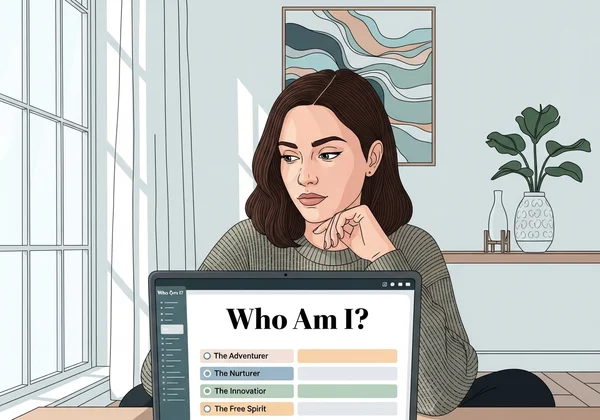
Understanding Autism Signs in Adult Women
Autism is a neurotype, a different way of processing the world. For decades, research focused almost exclusively on boys, creating a narrow and often misleading picture. As a result, many women have spent their lives unaware that their internal experiences might be explained by autism.
Why Autism in Women is Often Missed or Misunderstood
The primary reason autism is missed in women is that the diagnostic criteria were built around male presentations. Girls and women are often socialized differently, encouraging them to be more compliant, quiet, and attuned to others' emotions.
This can lead them to develop sophisticated coping mechanisms from a young age. Instead of being seen as autistic, they are often misdiagnosed with anxiety, depression, or personality disorders. Their internal struggles are dismissed as personality quirks or emotional sensitivity, leaving the root cause unaddressed.
Common "Hidden" Autistic Traits in Adult Females
While every autistic person is unique, many women report a shared set of experiences that differ from the male-centric stereotype. These often include:
-
Intense, Focused Interests: The stereotype for special interests might be trains or numbers. But an autistic woman's passions may be more socially "acceptable," like literature, psychology, art, or animal welfare. These passions are often deep, detailed, and a core part of their identity.
-
Deep Empathy and a Strong Sense of Justice: Contrary to the myth that autistic people lack empathy, many experience it intensely—sometimes to an overwhelming degree. They often feel others' emotions as their own and have an unwavering commitment to fairness.
-
Challenges with Executive Function: This can manifest as difficulty with planning, organizing tasks, managing time, or transitioning between activities, even when highly intelligent and capable in other areas.
-
Rich Inner World: Many autistic women have a vivid imagination and spend a great deal of time in their own thoughts. They may prefer solitude to recharge and process the world.
-
Sensory Sensitivities: Being highly sensitive to sounds, lights, textures, or smells is a common trait. A scratchy tag on a shirt or the buzz of fluorescent lights can be genuinely distressing.
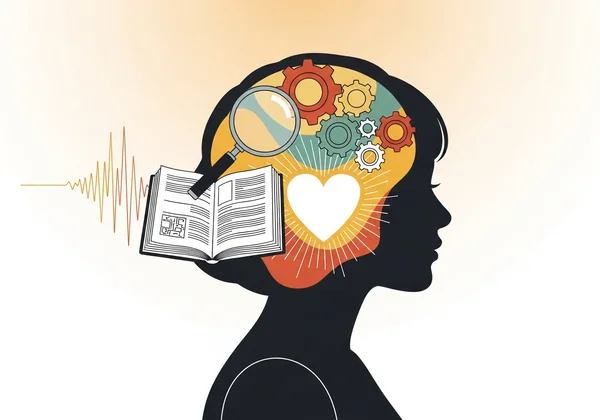
Social Exhaustion and Autistic Burnout: More Than Just Stress
If you constantly feel drained after social events, even ones you enjoy, you might be experiencing social exhaustion. For many autistic women, this goes beyond simple tiredness and can lead to autistic burnout.
Autistic burnout means deep physical, mental, and emotional exhaustion. It comes from years of stress in a world built for neurotypical people. It's the result of years of masking your true self and coping with sensory overload. It's not just a bad week; it's a shutdown that can impact your ability to function in daily life. Understanding this is often a critical step toward self-compassion.
Female Autistic Masking: What It Is and Why We Do It
One of the most significant reasons autism goes unrecognized in women is a behavior known as "masking" or "camouflaging." It is a primary driver of the social exhaustion described above and a key area to understand on your journey of self-discovery. If this concept resonates, you can begin that journey with a simple test.
The Psychology Behind Autistic Camouflaging
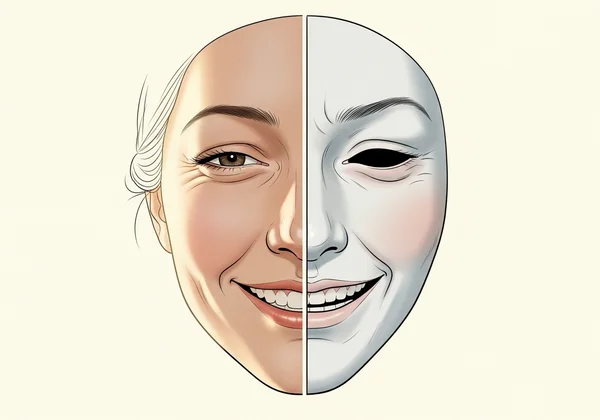
Autistic camouflaging is the conscious or subconscious suppression of natural autistic traits to blend in with neurotypical peers. From a young age, many autistic girls learn their natural way of being is considered socially unacceptable. This can include avoiding eye contact, stimming (repetitive movements), or speaking directly.
To avoid criticism or bullying, they begin to observe and mimic the behavior of others. They build a "mask" made of learned social scripts, practiced facial expressions, and forced eye contact. While an effective short-term survival strategy, it comes at an immense long-term cost.
Everyday Examples of Masking in Women
Masking isn't always a dramatic performance. It often shows up in small, draining, everyday actions. You might be masking if you:
- Force yourself to make eye contact even when it feels uncomfortable or intense.
- Mentally rehearse conversations and social scripts before an event.
- Mimic the body language, tone of voice, or phrases of people around you.
- Suppress the urge to stim (e.g., fidget, rock, or flap your hands).
- Attend social gatherings you find overwhelming just to appear "normal."
- Constantly monitor your facial expressions to ensure they are "appropriate."
The Cost of Constant Masking: Burnout and Mental Health
Living behind a mask is exhausting. It takes constant mental energy to meet social expectations. That leaves little room for your own needs. This chronic effort is a leading contributor to autistic burnout, anxiety, and depression.
The heaviest cost of masking is often a lost sense of self. When you spend your life pretending to be someone you're not, it can be difficult to know who you truly are. Unmasking is a journey of reconnecting with your authentic self and learning to honor your needs.
How an "Am I Autistic Quiz for Women" Can Help
If the concepts of hidden traits and masking resonate deeply with you, you might be wondering, "What now?" An "Am I Autistic" quiz designed for adults can be a valuable and validating tool. It provides a structured way to reflect on your life experiences through a new lens.
Introducing the CATQ: A Tool for Unmasking Your Traits
Many online quizzes are available, but some are more scientifically grounded than others. On our platform, we feature the Camouflaging Autistic Traits Questionnaire (CATQ). This tool is specifically designed to measure the extent to which a person masks their autistic traits.
Masking is common in women. That's why the CATQ is so insightful. It doesn't just check core traits. It measures the effort you spend hiding them. This can help connect the dots between your internal feelings and your outward behaviors. Our online quiz is a private, low-pressure way to explore these possibilities.
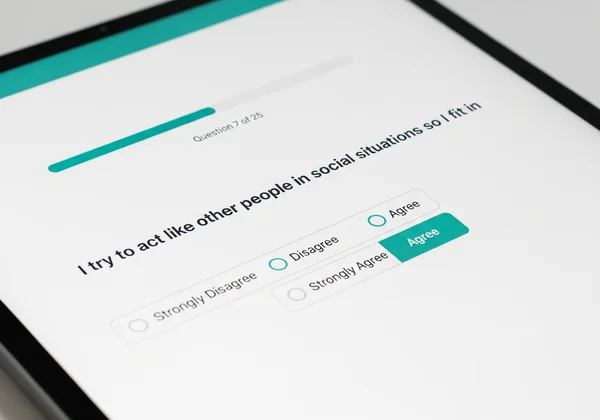
Interpreting Your Autistic Quiz Results for Deeper Insight
After completing a quiz, you will receive a score and an interpretation. It’s important to see this result not as a label, but as data. A high score suggests that your experiences align with those of many autistic individuals who camouflage their traits.
This can be an incredibly validating moment. It’s objective information that confirms your feelings aren't just "in your head." For a deeper understanding, our platform offers an optional AI-powered report. This personalized analysis reviews your responses to provide insights. It highlights your unique strengths, challenges, and potential next steps.
What an Online Quiz Can (and Cannot) Tell You
It is crucial to understand the purpose of an online screening tool.
- What it CAN do: An online quiz can provide powerful self-insight, validate your lifelong feelings, and give you the language to describe your experiences. It can be a reliable first step in deciding whether to seek a formal assessment.
- What it CANNOT do: An online quiz is not a medical diagnosis. A formal diagnosis of Autism Spectrum Disorder is different. It can only be provided by a qualified healthcare professional, like a psychologist or psychiatrist, after a full evaluation.
Think of it as a signpost, not a destination. It points you in a direction for further exploration.
Your Journey Towards Self-Understanding: Embracing Your Neurotype
Learning about autism in women and the concept of masking can feel like finding a missing piece of your life's puzzle. It provides a framework that can transform confusion into clarity and self-criticism into self-compassion. This isn't about finding a flaw; it's about discovering how your brain is uniquely wired.
Your journey is your own. For many, simply having this new understanding is enough to start making positive changes—setting boundaries, honoring sensory needs, and allowing yourself to unmask in safe spaces. For others, it is the first step toward seeking a professional diagnosis. Whatever your path, it begins with knowledge.
Ready to take the first step? Discover more about your unique neurotype by taking our confidential and insightful autistic quiz today.
Frequently Asked Questions About Autistic Quizzes for Women
Am I autistic if I relate to these signs of autism in women?
Relating strongly to the signs of autism in women is a significant indicator that your experiences are valid and worth exploring. However, it is not the same as a formal diagnosis. Many traits overlap with other conditions, but if you identify with the patterns described, an online quiz can be a helpful next step.
Is there a free online "Am I Autistic" quiz specifically for women?
Yes. The CATQ (Camouflaging Autistic Traits Questionnaire) isn't exclusively for women, but it's highly relevant. It's especially helpful for women who suspect they are masking their traits. You can take a free, confidential version of this autistic screening on our website to gain insight into your social coping strategies.
Can an online autistic quiz for women provide a formal diagnosis?
No, and this is a critical point. No online quiz can provide a medical diagnosis. These tools are for screening and self-exploration only. They help you organize your thoughts. They can help you decide if you want to pursue a formal assessment with a professional who specializes in adult autism.
What should I do after taking an autistic quiz for women?
After taking a quiz, take some time to reflect on your results. Read articles, watch videos, and listen to the experiences of other autistic women. If the results confirm your suspicions and you feel it would be beneficial, consider seeking a formal evaluation or speaking with a therapist knowledgeable about neurodiversity.
What is autistic masking, and why do women often do it?
Autistic masking (or camouflaging) is the act of hiding one's natural autistic traits to fit in with societal expectations. Women, in particular, are often socialized to be agreeable and socially adept. This leads them to develop masking techniques from a young age to avoid standing out or being criticized.